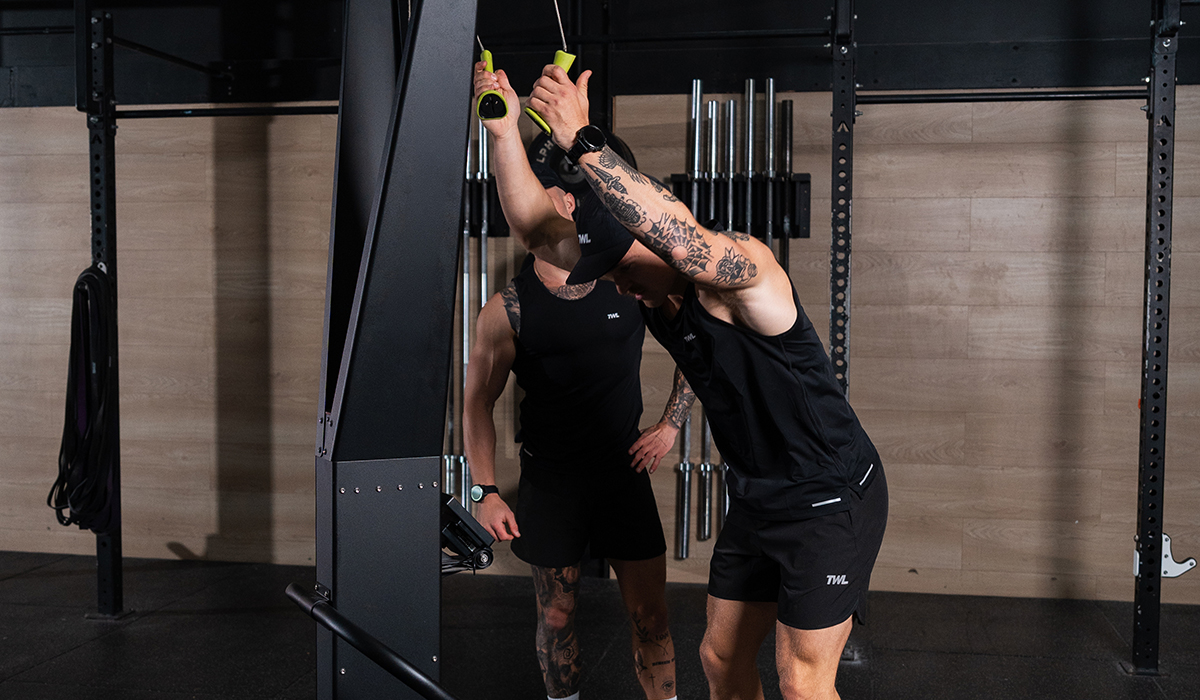

Station one. A thousand metres on the SkiErg, adrenaline spiking, crowd noise everywhere, and every instinct telling you to rip the handles down like you’re starting a chainsaw. Do that, and you’ll pay for it for the next hour — on the sled, on the burpees, on the wall balls, and especially on the farmers carry, when your forearms file a formal complaint.
Here’s the truth that separates experienced racers from first-timers: the SkiErg is not an arm exercise. Treat it like one and you’ll torch your biceps, lats and grip inside four minutes. Treat it like what it actually is — a full-body hinge powered by your legs and core — and you’ll come off station one barely breathing hard through the arms, with your race still in front of you.
Where the power actually comes from
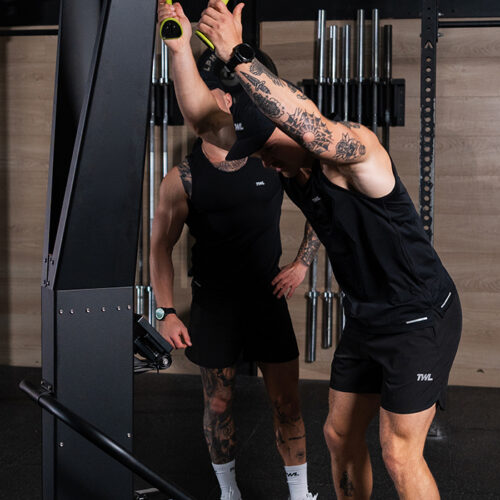
Elite skiers generate most of their stroke through the trunk and legs. The arms are connectors — they transmit force, they don’t create it. Think of the movement in three parts:
The reach. Rise tall onto the balls of your feet, arms extending up and slightly in front of your face — not fully locked overhead like you’re signalling a touchdown. Overreaching wastes time and puts your shoulders in a weak position. Hands around forehead height is plenty.
The drive. This is the whole stroke. Crunch hard through your core and hinge at the hips, like you’re doing a standing ab wheel rollout in reverse. Your bodyweight — not your biceps — drags the handles down. Knees bend as you fold, heels drop, and your arms simply stay connected, elbows travelling down past your ribs. Finish with your hands beside your hips, torso folded to roughly 45 degrees.
The recovery. Stand back up in one smooth motion, letting the handles rise as you extend. Don’t fight the return — this is your rest. Every stroke has a built-in breather if you take it.
If your triceps and lats are screaming at 400 metres, you’re pulling with your arms. If your abs and legs feel the work, you’re doing it right.
Damper and pacing: the unsexy stuff that wins races
Damper setting: ignore anyone who slams it to 10. A damper between 5 and 7 suits most athletes — heavier racers can sit slightly higher, lighter athletes lower. A moderate setting rewards rhythm and technique; a maxed-out damper rewards brute force and then bills you for it later.
Stroke rate: long and powerful beats short and frantic. Somewhere between 35 and 45 strokes per minute is the sweet spot for most. Watch the racer next to you machine-gunning half-strokes at 60 per minute — you’ll pass their split with fewer strokes and half the burn.
Pace: this is station one of eight, not a 1,000m time trial. Your race pace should sit 3–5 seconds per 500m slower than what you could pull fresh. If your standalone 1k best averages 1:55 per 500m, race at 1:58–2:00. Those few seconds cost you almost nothing on the clock and buy you enormous change later. Nobody has ever won their age group on the SkiErg — plenty have lost it there.
A simple structure: settle into rhythm for the first 100m, lock into your target split for the middle 800m, and resist the urge to sprint the last 100m. Empty handles and a fast transition beat a heroic finish and jelly arms.
Three faults that cost you the race
1. The bicep pull. Elbows flaring and bending early, pulling the handles down with arm flexion. Fix: think “hands stay long, body folds.” Your arms are ropes, not engines.
2. The full squat. Dropping into a deep squat every stroke turns 1,000m into 200 unnecessary squats before you’ve even met the sled. Fix: hinge, don’t sit. Modest knee bend, big hip fold.
3. The overreach. Launching onto tiptoes with arms fully locked overhead adds distance without adding power. Fix: reach to forehead height, stay compact, keep the stroke cycling.
Train it before you race it
Once a week, give the SkiErg honest attention. Intervals of 250m at race pace with short rests teach pacing discipline. Longer 500–750m repeats at a controlled rate build the trunk endurance the movement lives on. And occasionally practise the thing nobody practises: stepping off the erg and immediately moving — a sled push, a run, a set of wall balls. Racing is transitions.
Your grip will thank you too. The athletes who lose minutes late in a race rarely lose them to fitness — they lose them to hands and forearms that were spent by station three. Every gram of arm you save on the SkiErg is strength you’ll still have when the farmers carry handles are staring at you.
The takeaway
Ski with your body, pace with your head, and treat station one as the start of your race, not the highlight of it. Long strokes, moderate damper, controlled split, quick transition — then go race the parts that actually decide your result.
Train smart. Push the Boundaries. And keep your arms for when it counts.
Train Without Limits.
Gearing up for race day? Shop grips, apparel and recovery gear built by athletes who race, at twl.co