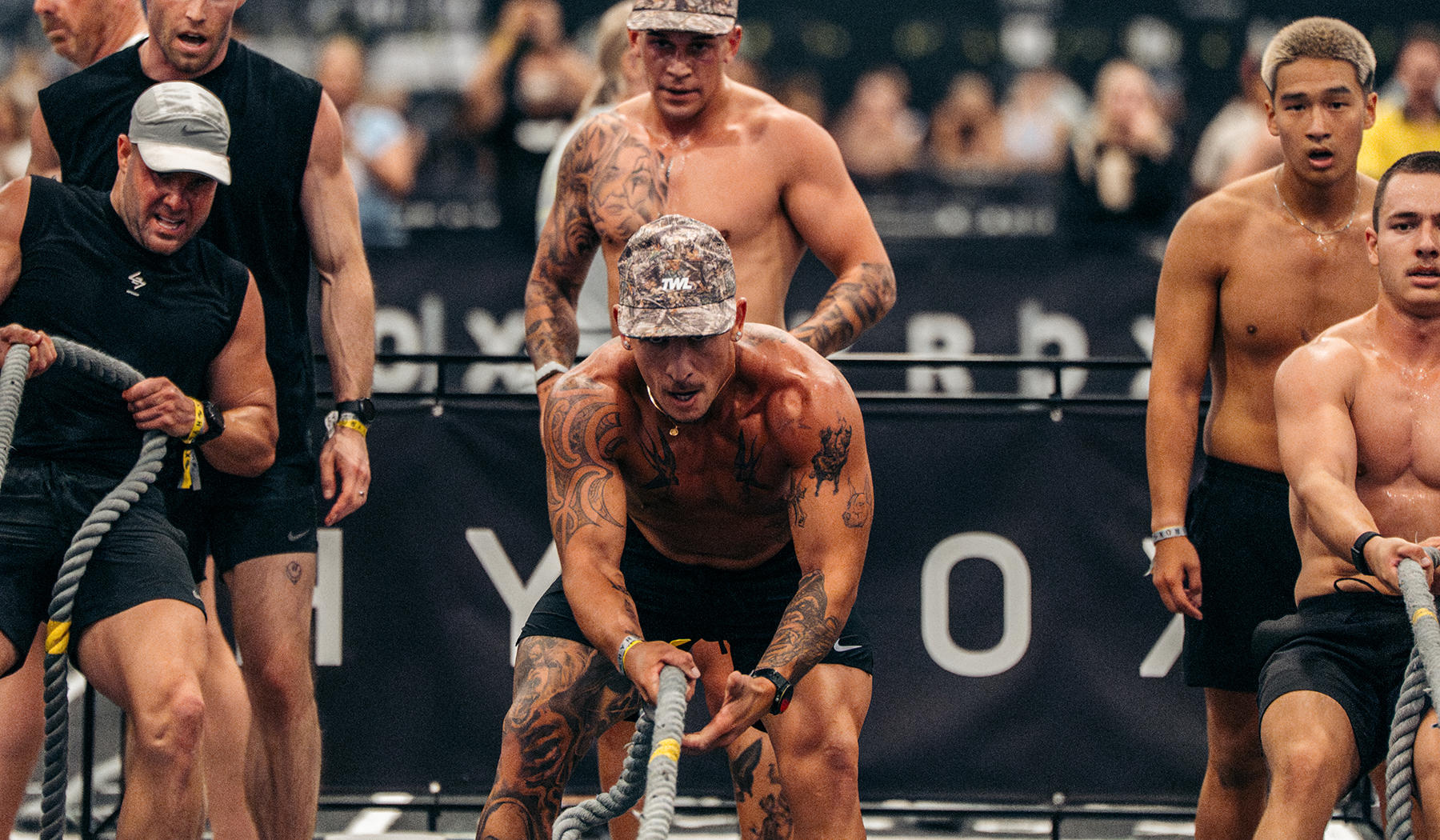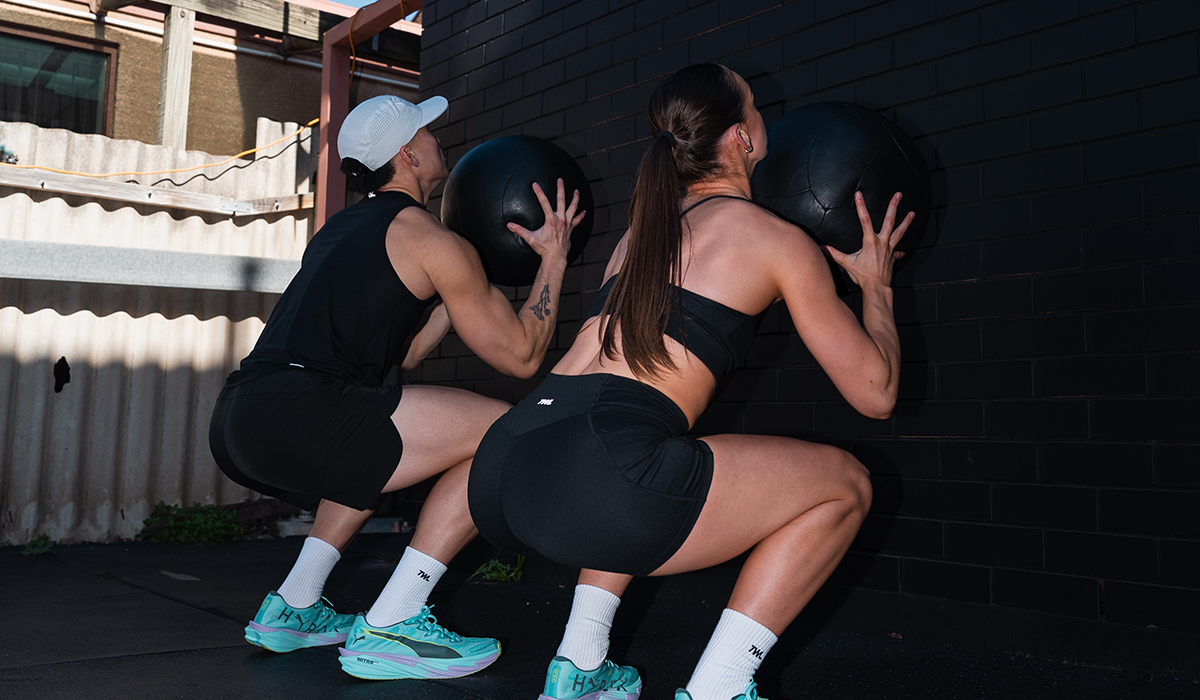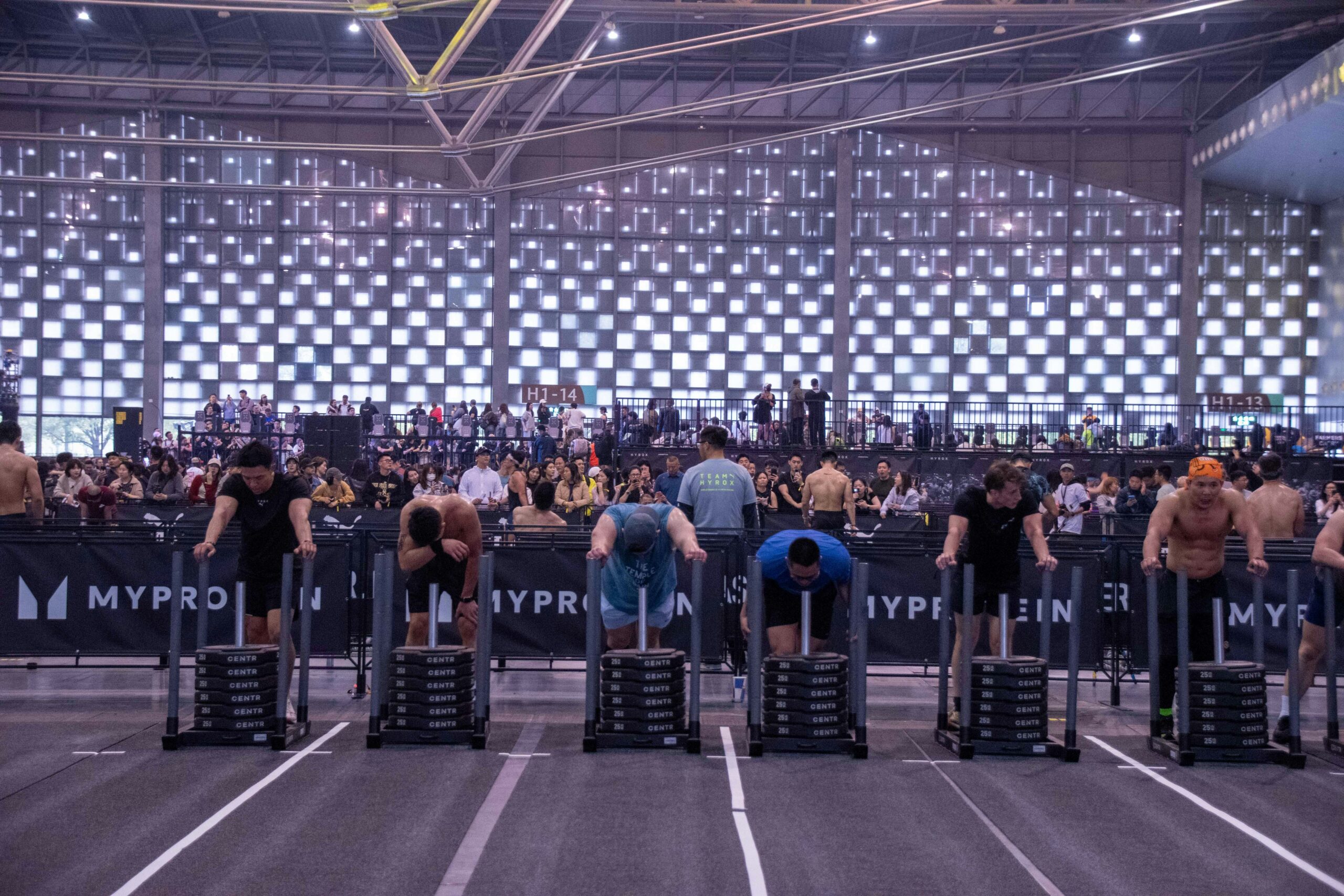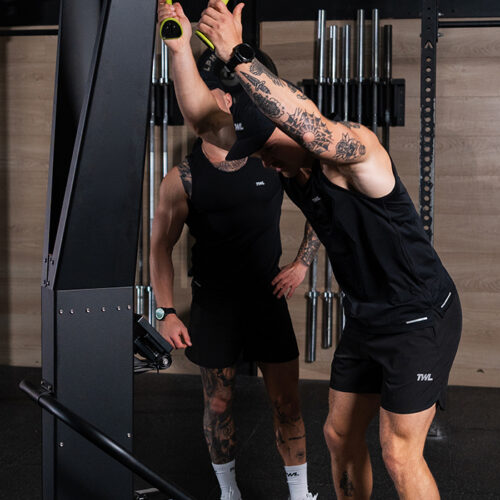

The sled stations are where Hyrox races are won and lost. The sled push and sled pull sit back-to-back on the floor, they hit your legs harder than almost anything else in the race, and if you get them wrong you’ll walk into the next running lap with jelly for quads. The good news: the sled rewards technique far more than raw strength. Dial in your body position, sort out your shoe grip and pace it sensibly, and you’ll move faster while burning less. Here’s how.
Sled Push: get low and drive
The single biggest mistake we see is standing too tall. When you push a heavy Hyrox sled with your torso upright, you’re fighting the load with your arms and lower back, and the sled barely budges. Instead, drop your hips and get your body into a near 45-degree line from your heels to your head. Arms stay long — locked or nearly locked — so the force travels straight from the floor through your legs into the sled, not into bent, fatiguing biceps.
Think about pushing the floor away behind you rather than pushing the sled forwards. Your power comes from full leg extension, so take deliberate, powerful steps and drive through the balls of your feet with each stride. Keep your head neutral and your gaze a couple of metres ahead — dropping your chin to your chest collapses your position.
The heavier the sled and the stickier the floor, the more you’ll want short, choppy, aggressive steps. On a faster surface you can lengthen your stride. Either way, keep the sled moving; it takes far more energy to break static friction and get a stopped sled going again than to keep one rolling. Pick a pace you can sustain end-to-end rather than sprinting the first 12.5m and stalling.
Sled Pull: hips back, hand over hand
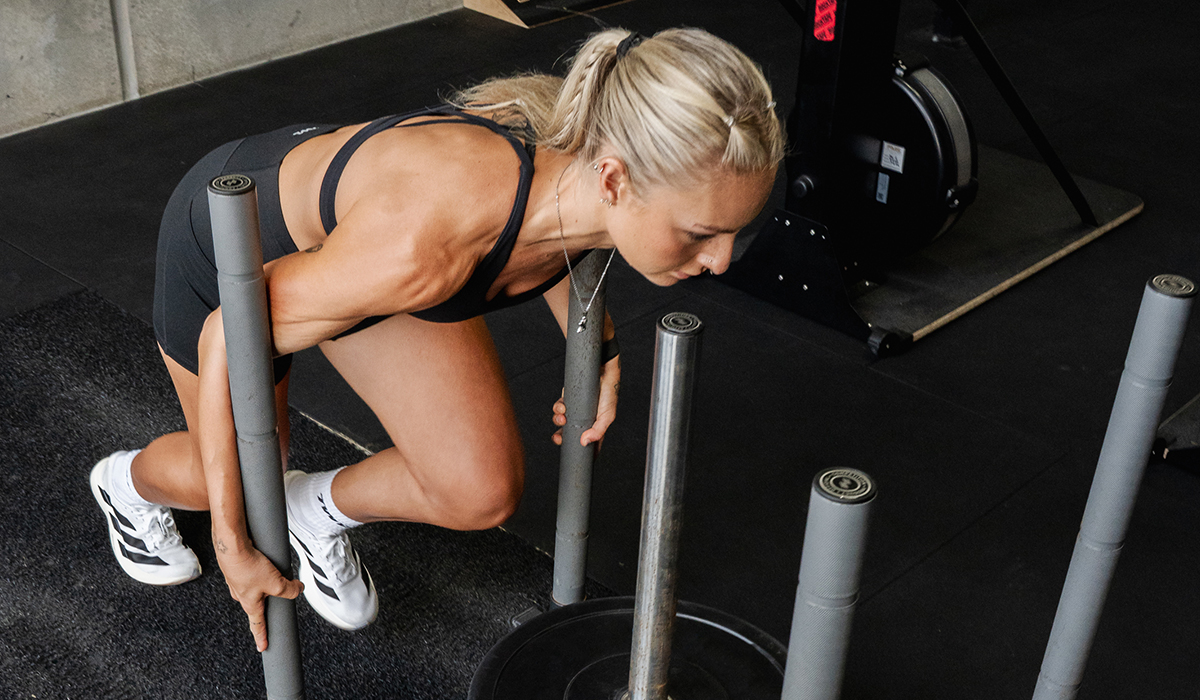
The pull is a different animal. You’re seated back into a low, athletic position — hips down and behind you, chest proud, arms working hand over hand on the rope. The temptation is to pull with your arms and stand upright, but that turns it into an upper-body grind. Instead, sit your weight back so your bodyweight does the work, and use your legs to reset between pulls.
Big, greedy hand-over-hand pulls are more efficient than lots of little tugs. Reach long, pull the rope all the way into your hip, then step back to reset and reach again. Between reps, walk backwards to the line rather than shuffling — every centimetre you cover on your feet is rope you don’t have to pull. Keep tension on the rope the whole time; letting the sled stop means you pay the static-friction tax all over again.
Shoe grip: the hack nobody talks about
Here’s the detail that separates smooth sled stations from a slip-and-slide: your shoes. On the rubber and turf surfaces used at Hyrox, a flat, grippy outsole gives you a platform to actually transmit force. If your feet slide out from under you on the push, you’re leaking power and wasting energy with every step.
Flat-soled trainers or a shoe with a firm, sticky rubber outsole are ideal — this is exactly why so many athletes race in cross-training shoes rather than soft, cushioned road runners with rounded heels. A big, squishy heel rolls and compresses under load, robbing you of that direct connection to the floor. Whatever you race in, practise the sled in the same shoes so there are no surprises on the day. Chalk on your hands for the pull rope helps too, especially deep into the race when your grip is fading.
Pacing: protect the run
The sleds don’t happen in isolation — there’s a run before and a run after. That’s the whole game. It’s tempting to attack the sled at 100% because it’s a strength station, but redlining your heart rate and torching your legs means the next 1,000m run falls apart. You want to arrive at the sled with a plan and leave it able to run.
A smart approach is controlled, unbroken effort at maybe 80–85% rather than all-out. If you must rest, rest briefly and purposefully — a few deep breaths behind the sled beats a long stand-around that lets your heart rate spike back up when you restart. For most age-groupers, one or two short, sharp breaks on the heaviest sleds is faster overall than grinding to a complete stall.
Break the distance into chunks in your head — four segments of 12.5m — and tick them off. It keeps you honest and stops the station from feeling like an open-ended slog.
Train it before race day
None of this works if the first time you try it is on the start line. Get reps in with a loaded sled on the surface you’ll race on, film yourself from the side to check that 45-degree push angle and hips-back pull, and rehearse your breaks so they’re a decision, not a panic. Pair your sled sessions with a run straight after so your legs learn to switch back into running under fatigue.
Nail body position, lock in your grip and pace with the next run in mind — that’s how you turn the sleds from the scariest stations on the floor into places you quietly gain time on the field.