Teaching the Snatch – Jason Khalipa

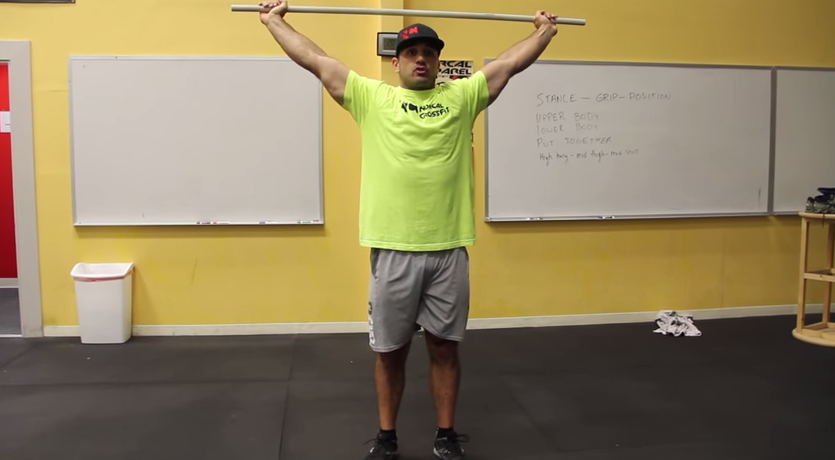
Whether you are looking at perfecting your snatch or a coach looking to assist your athletes in developing their movements, learn from one of the great coaches in CrossFit Jason Khalipa.

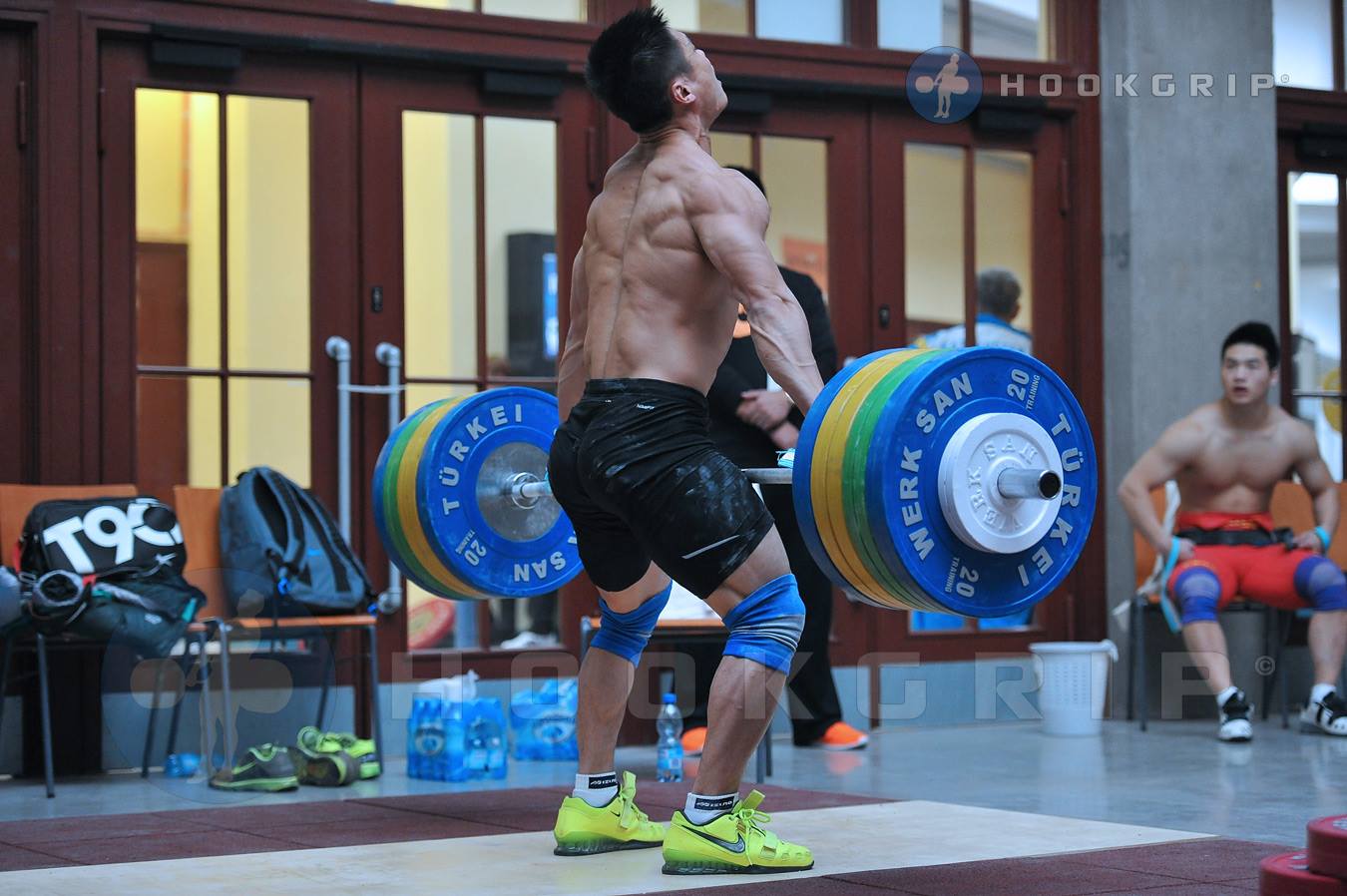
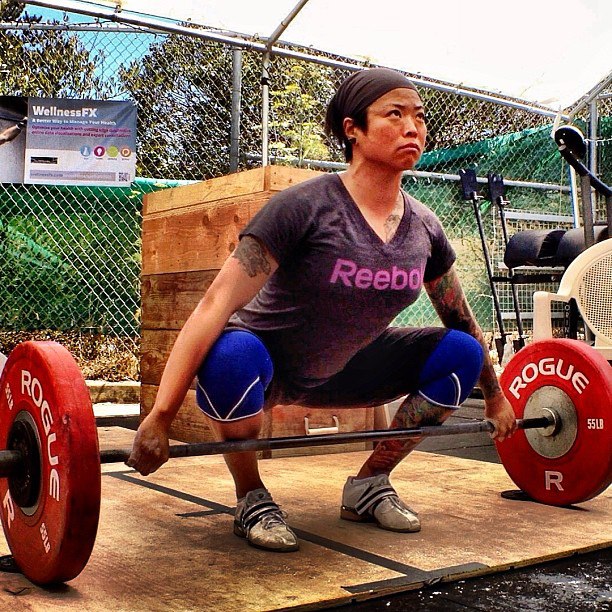
Khalipa breaks down one of the most technical lifts into three parts:

  • Stance
  • Grip
  • Position

The snatch is broken down into upper and lower body then puts it all together! A great way to teach the Snatch and get athletes snatching effectively.

Teaching the Snatch – Jason Khalipa – Watch Now >

The Story in Australia – CrossFit Regional Australia 2014

Relive the magic of the 2014 Australia Regional, with this amazingly well produced video by Michael McCoy from CrossFit.com

The Australia Regional brought a weekend of surprises. While Games veterans Ruth Anderson Horrell and Chad Mackay failed to qualify, returning competitor Denae Brown took first overall for the women, and Rob Forte stood atop the men’s podium for the second consecutive year.

Games spots were up for grabs all weekend. “When you look at this Leaderboard, it’s becoming very clear that Australia is just as competitive as any other region out there,” said “CrossFit Games Update” host Sean Woodland. Returning to defend her title as regional champion, Kara Webb nabbed first-place finishes in Events 1 and 3 but knew that didn’t mean a thing.

“There’s a lot of workouts to still be done,” she said with a grin on Day 2.

Brown—who was back from pregnancy and a year away from competition—finished second and fourth on Day 3 to take top spot on the women’s podium.

Webb was second, and Pip Malone finished third. Fan favorite Mackay had a rough Day 1, picking up 22 points on Event 2.

“Today’s just about effort … . I know I’m gonna put in my best effort, and hopefully I’m gonna climb back up that Leaderboard,” Mackay said on Day 2.

Despite the effort, Mackay was not able to overtake Forte, Games vet Brandon Swan and Khan Porter, who will make his first Games appearance.

Video by Michael McCoy. The CrossFit Games — (http://games.crossfit.com)

Watch Now

How to tape the Hook Grip for CrossFit with Jason Khalipa

If you ask any Olympic Lifter or high level CrossFit athlete, they will tell you the importance of the Hook Grip. Not only does it provide strength but also added stability. This is no more evident that in WOD’s such as Isabel, which involves a high number of Snatch repetitions.

Often your thumb and fingers will become very sore and sensitive due to the pressure. Many top level athletes subsequently tape their thumbs in the hook grip position.

Whether you use RockTape (as show below) or Goat Tape – they are all brilliant applications on how to protect your fingers and keep you moving for longer!

Check out How to tape the Hook Grip for CrossFit with Jason Khalipa!

Watch Now>

Pick up some RockTape or Goat Tape at The WOD Life today!

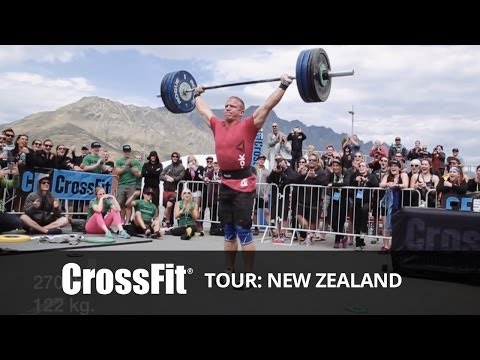
CrossFit Tour Hang Snatch Event

With the Hang Snatch featuring in Event One of the CrossFit Games Regionals, just around the corner what better way to watch the Pro’s?

Featuring Chad Mackay, Jason Khalipa, Scott Panchick, Rebecca Voight, Alessandra Pichelli and Ruth Anderson-Horrell, the Hang Snatch was one of the events at the CrossFit Tour in Queenstown, NZ.

Enjoy all of the action, including a Kiwi inspired PR from Khalipa!

Watch Now – CrossFit Tour Hang Snatch Event

7 Tips to Maximise Results of Weightlifting for CrossFit

firstpull

The WOD Life welcomes back JP from First Pull.  With experience in coaching weightlifting, JP walks us through 7 Tips to Maximise Results of Weightlifting for CrossFit.

The growth of CrossFit is not to be under estimated. CrossFit is the Starbucks of fitness as in there is a CrossFit box on every corner of every major city. Many weightlifting coaches or trainers criticised CrossFit for what it is – a mix and match of pretty much everything. They also criticise CrossFit for its goal, meaning that the participant’s aim is to become average at everything rather than being a specialist. I have stated in a previous article that a strength and conditioning coach does not have to like the sport the athletes he is training are participating in.
 froning-snatch

The truth is that most CrossFitters need weightlifting guidance and coaching, and they will seek coaches out. That’s good for us, weightlifters. If they do seek you out and you see potential in them, it’s your duty to educate them about a possible future in weightlifting rather than criticise them for what they do (CrossFit). Personally I will train anybody that is willing to take what we do seriously. All I ask is dedication, seriousness and will, which many coaches will agree are the most important traits when starting weightlifting.

Anyhow, the lack of information about how to maximize the result of weightlifting training for CrossFit is obvious. I have done extensive work with CrossFitters as well as participants of other sports – like rowing. In both cases, I highly disagree with the randomized programming of the lift as I believe in highly individualized training sessions where your very own weaknesses are being worked on.

If you are a CrossFitter and you are serious about being a great CrossFitter, I believe you should plan some weightlifting-only training sessions. This leads me to the following list of considerations that should make your learning easier. The following are a collection of basic tips that will really maximize your results – given the reality of your sport (you have many other training sessions where different variables are being trained and you have limited time to learn).

1. You need a Session where you train the snatch and clean and jerk only

Want to get better at something? Practice that something! Many CrossFitters I have trained or know have a backsquat or deadlift of over 136kg/300lb, yet most can’t clean 100kg/220lbs to save their life. CrossFit is good at improving people’s general strength since a lot of work is being put in compound movements like squats and deadlifts. You don’t need to work more on those during your lifting sessions because you really need to put work on your weaknesses which are your lifts.
dimas-thumb-520x389-1188

2. Wear pants.

I am not a clothing dictator and I understand the fashion associated with CrossFit. I respect your choice of clothes but allow me to make this statement: For the men, I find that board shorts mess with the pull because it subtly ‘’block’’ the bar. For the ladies, I know that shorts are only getting smaller and smaller, but the bar has to touch your legs (that’s not optional) and most women CrossFitter I have worked with do not do so because it ‘’hurts’’ or it cut them open. Wearing pants/leggings/yoga pants solves it all. Funny trick, but it works.

rorym_USAW_Umeda_SnatchBottom_

3. Learn to rest.

Pretty much all CrossFitter I have worked with had trouble staying put in between sets. Most weightlifting gyms are equipped with chairs where the lifter sits for 1-3 minutes between each sets. Whenever you are training weightlifting for other sports – be it CrossFit or football or anything else- the same principle applies. You need the rest to be mentally prepared for the next lift as well as to allow your central nervous system to be in top shape.
CourtneySamway_13_2_416

4. Control your emotions

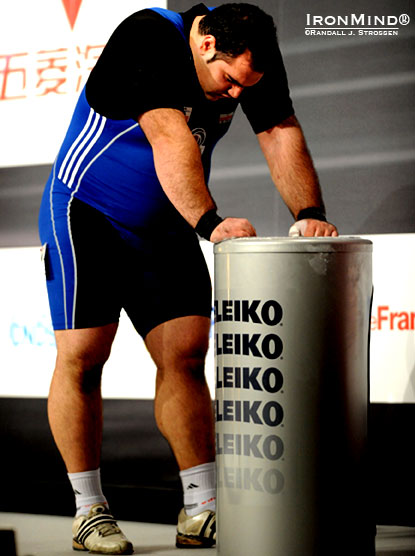
Many people will put tremendous psychological and physical stress over themselves by getting angry at a missed lift, trying it at least 10 more times and then rant about it all day. These people are all of us – we all do that at some point. The difference between us and high level weightlifters is that they almost all of them exert incredible control of their emotions. It is important to do so because it does not cloud your judgment and you will limit the risk of injuries. Stay calm and lifting heavy bars will be the norm for you, pal.
salimi-focus_lg

5. Don’t cling on certain cues too much.

A cue has a limited shelf life. I have used about every cue out there, even created some of my own. Some cues I have used are completely illogical from a technique perspective but they worked because the trainee could relate to it at that moment in time.

Thus, a cue is used at one point in time to correct a mistake. Some will be used for longer periods of time, others will last one workout. However, people tend to cling to those cues as if it’s the universal truth. For example, most CrossFitters were told to really put lots of effort in driving the bar up through the use of different cues such as Jump, Shrug, Pull high, Bang it up, High, Throw it in the ceiling, etc. Some people argue that such cues are detrimental to the development of weightlifters but I am not willing to enter this debate.

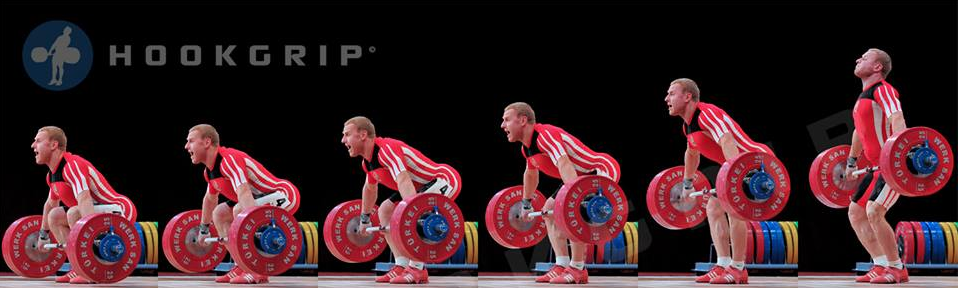
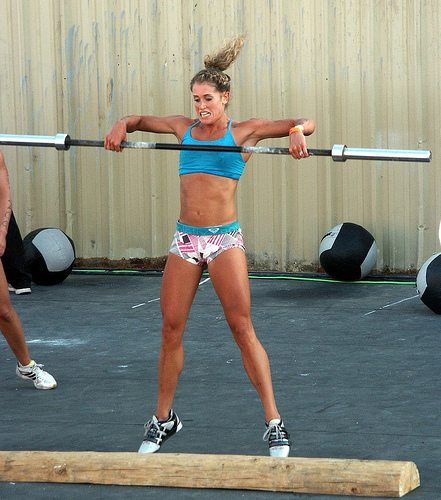
However, what I have found is that most CrossFitters cling on cues that represent bar height, yet they were never cued about how to transition under correctly. Upward movement is important, but it’s half of the movement. Clinging on a cue that does not address the second half of the movement seems illogical to me. Put another way, In CrossFit, the lifts are often described as a triple extension (hips, knees and ankles). Just remember that it’s also a movement of triple flexion (hips, knees and ankles) and the timing in switching from extension to flexion is where skills matter.
snatch-triple-extension

6. Approach the lifts for what they are.

I don’t know where the idea that the lifts are just a dead lift and jump came from and how it became accepted as truth, but it is a very simplistic description of what the lifts are about. A deadlift is a very slow movement whereas the Olympic lifts are by nature extremely fast. In fact, speed of the bar – but also of the body (speed of muscle contraction and speed of change of direction)- is necessary for successful lifts.

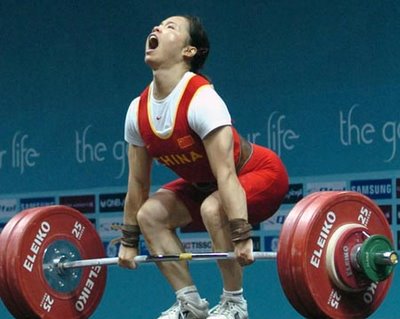
Also, the deadlift is done by using a different stance in which the back and hips are predominantly recruited. It is done this way because the deadlifter does not need to think about upward movement of the bar which only the knee extensor could do. Hip and ankle extension contributes just as the shoulder griddle to this upward movement, but for the most part the clean stance allows the lifter to use a lot more quadriceps. In a clean, a lifter has his butt lower than a in deadlift for this reason. Thus, the starting position is of extreme importance to the success of the lifts. I challenge you to find an elite lifter who pulls with an horizontal back.
Weightlifting_in_Olympic_2008_Game

7. The bar has to touch your legs

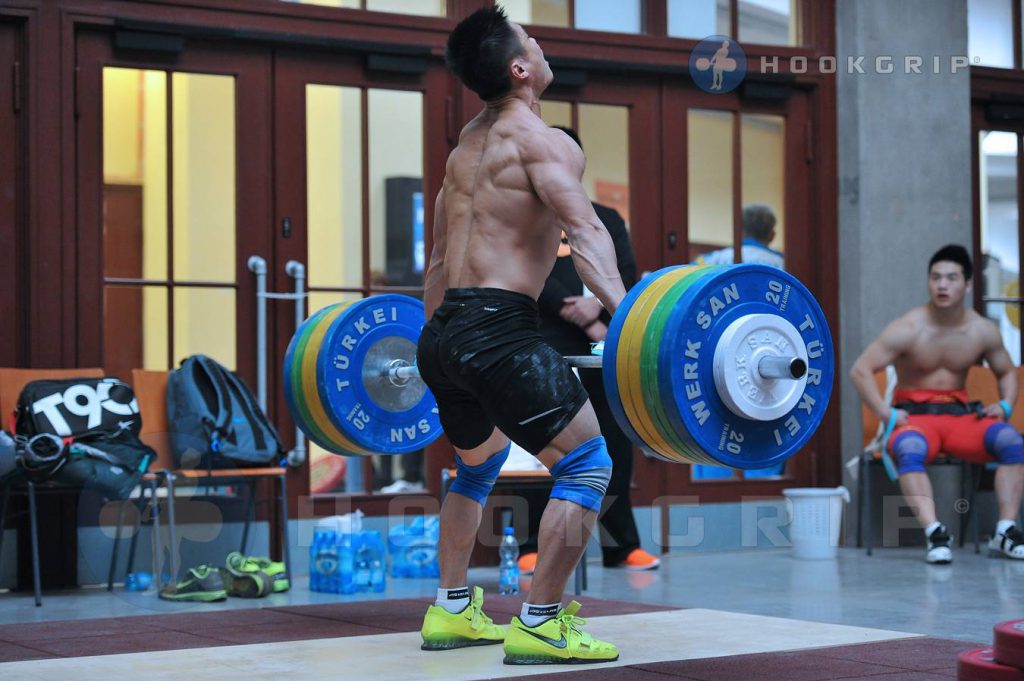
I know I just talked about it, but really… it has to touch your legs. I have written an entire article on this matter but let’s just say that the closer it is, the more you benefit from a mechanical standpoint.
 lu-xiaojun-snatch-pulls

Keep training smart.

Jean-Patrick

Firstpull.net
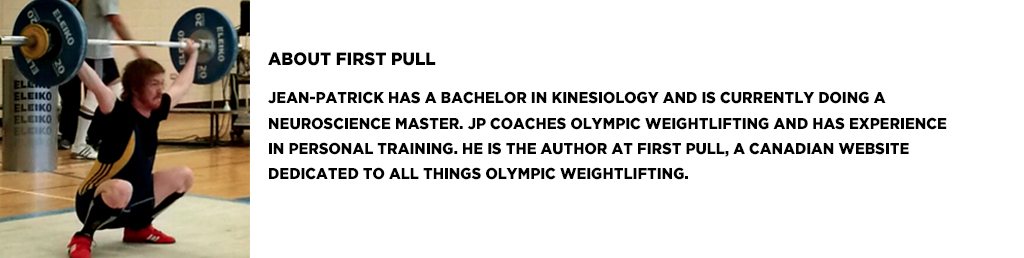
JP

Snatch Efficiency Tips with The Training Geek

When you think of CrossFit, you automatically think of the Snatch. One of the most challenging movements to master, The Snatch is an Olympic Lifting movement in which a weighted barbell is brought from the ground to overhead. Whilst strength is important, technique and efficiency is key to proficiency in this movement and overall success in CrossFit. The WOD Life present to you these Snatch Efficiency Tips from Lester Ho, The Training Geek.

What is Efficiency?

There are many definitions of efficiency but in general, it describes the degree to which time, effort or cost is utilised for the intended purpose. In motor control and movement, this refers to using the least amount of energy and time to perform a certain movement pattern.

Snatch Efficiency. What is It?

Defining snatch efficiency begins with understanding the purpose of the snatch. To get the barbell overhead in one movement. Creating enough vertical displacement to allow the weightlifter to get under the bar and absorb/support the weight as it begins its downward path. Use the levers of the body to produce enough force. Transfer all that force onto the barbell. Let the barbell carry on moving to reach the highest displacement. Get the bar stabilised in that overhead position while it begins its downward path.

Screen Shot 2013-11-19 at 8.57.50 AM

The Two Common Errors in Being Efficient..

1. Inefficient Pull = Poor Force Production and Transference

An inefficient pull usually refers to not utilising the correct muscle groups to perform the necessary action of lifting the bar off the ground. Technically, the legs do most of the work to overcome inertia to allow the bar to begin moving. However, if the upper body comes into play, this would cause one thing to happen. The arms would begin to bend which makes the upper back take over the movement so the legs can no longer contribute to the movement.
So when that happens, proper force production is not achieved and efficiency is lost. Also, when the arms are involved from the start, you no longer follow the sequence of force transfer from the legs to the torso to the arms to the bar. You have skipped all the steps and went straight to using the arms, required much more effort to make the lift.

Screen Shot 2013-11-19 at 8.58.05 AM

Another form of an inefficient pull refers to the bar path and its proximity to the lifter. The purpose of the movement is to create as much vertical (upward) displacement and minimise horizontal (forward/backward) displacement. If the bar begins moving in a diagonal direction whether its away from you or towards you, more effort is required to get it back moving in that straight path and more importantly, you are not getting the most out of its vertical displacement.

The second key factor is the proximity of the lifter to the bar path. Try holding a 10kg plate in front of you with your arms fully extended and jumping at the same time. Now do the same with the plate close to your body. I dare to say the latter is easier. Same concept in the snatch. The further the bar is moving away from your body, the harder it is to control it.

barpath

2. Difficult Catch = Energy Wasted to Stabilise Barbell

This error is highly related to the first error of an inefficient pull. If the upper body is involved from the start or the bar is not moving straight and close to your body, the result of that is an inconsistent receiving position of the barbell at the top of its path. One of the common situations is that when the arms kick in, the bar is away from the body when the second pull is executed. Because of that, the distance between the barbell and the lifter is greater and it results in the barbell being way in front for the catch position.

To get it balanced or back into the right position above the lift, the barbell needs to literally be brought back and this involves the shoulders and arms to perform this action. Similarly, another situation is when the bar is brought into the hips too much and a bump is used in the second pull to bring the bar overhead. This results in the barbell forming a much bigger loop at the top. This causes the barbell to be behind you during the catch and you have to again use the arms and shoulders to bring it back forward to keep it balanced.

How to Correct for Snatch Efficiency.

1. Get the Movement Pattern Right.

Understand how force is actually produced for the snatch and how to transfer it efficiently to the barbell. Legs do the work at the start. The force from the legs can then be transferred to a torso that is rigid. The arms acting as hooks on the barbell then transfer the force onto the barbell to create the needed vertical displacement. While doing so, the barbell still needs to remain close to the body and moving as vertically as possible so that the force produced can be transferred to as much of a vertical direction as possible to the barbell to create the best position possible for the catch.

Screen Shot 2013-11-19 at 9.13.49 AM

2. Do Less to Achieve More.

Doing less doesn’t mean not using effort but using the right amount of effort at the right time to achieve the intended purpose. If you perform your pull correctly, you will be using less effort to move that same weight. Moreover, an efficient pull will result in the barbell not only going in the right direction (more vertical, less horizontal), but the barbell will be in the correct position for the catch. With the barbell being in the correct position (moving straight down instead of back or forward), the catch will be easier than having to move the barbell from a bad position to the right one. The weight can then be supported easily by the shoulders, arms and even the torso and legs than just the arms and shoulders to bring it back to the right spot.

Screen Shot 2013-11-19 at 9.48.58 AM

Relating Snatch Efficiency to CrossFit.

In CrossFit, there are times where the weightlifting movements are used in WODs and high repetitions are required of these movements. The errors I pointed out are the ones that are common in WODs which are later translated to their actual weightlifting movements. So by being able to have the same technique in the snatch for both the weightlifting purpose and the WOD purpose, this will allow you to be better from both ends. If you do the right things and let the barbell move as it is supposed to (straight up straight down), you use the right muscle groups such as your legs with sufficient effort and you save your arms for other movements possibly in a WOD. Similarly, when you go for a 1RM in the snatch, you will still maintain the same technical efficiency and be able to lift a heavier weight.

isabeloff cf dot com

Creating the mindset to have the same technique throughout whether it’s a WOD or a 1RM you are going for, you will benefit more from the movement and eventually reduce injury and enhance performance. Just remember, muscling the snatch does not make you better at the snatch. It just means using more muscles to make an easy movement more difficult.

The Training Geek

Diane Fu x Push Press – Olympic Lifts Poster

How awesome is this? 

Diane Fu of FuBarbell collaborated with Push Press to educate CrossFit Coaches and Athletes on the Olympic Lifts.

The Snatch, Clean & Jerk are all featured on this awesome collaboration project which Diane Fu is making available to the masses.

Screen Shot 2013-10-29 at 5.15.00 AM

To pick up your FREE Digital Print, click the image below:

Diane Fu x Push Press Olympic Lifts Poster