Snatch Grip Deadlift: How-to and Benefits

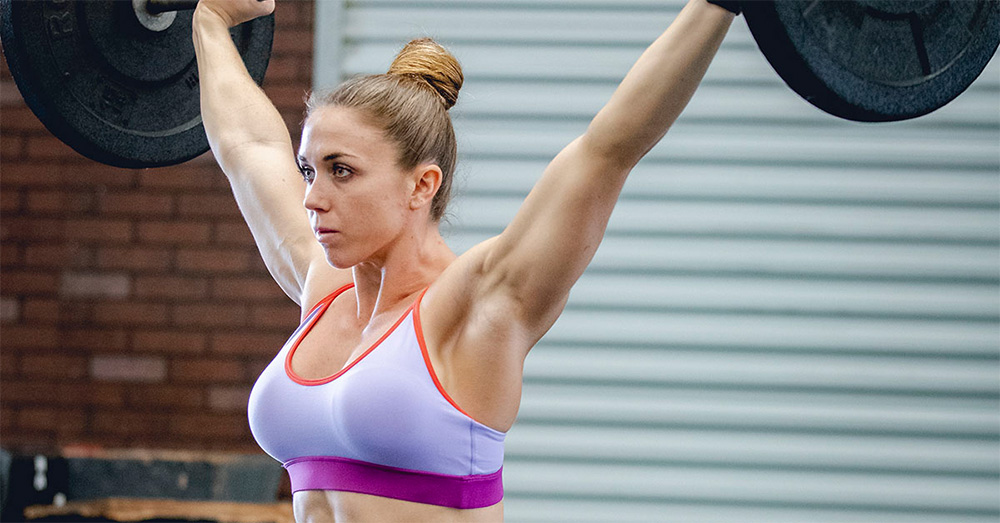
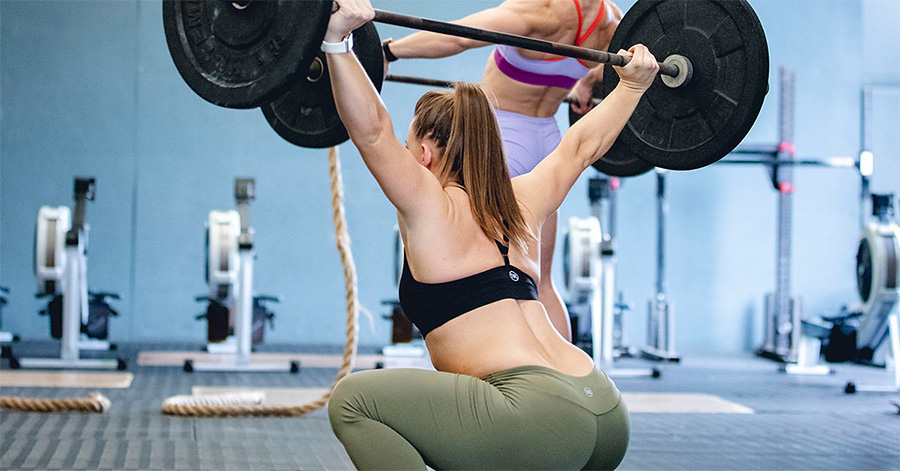
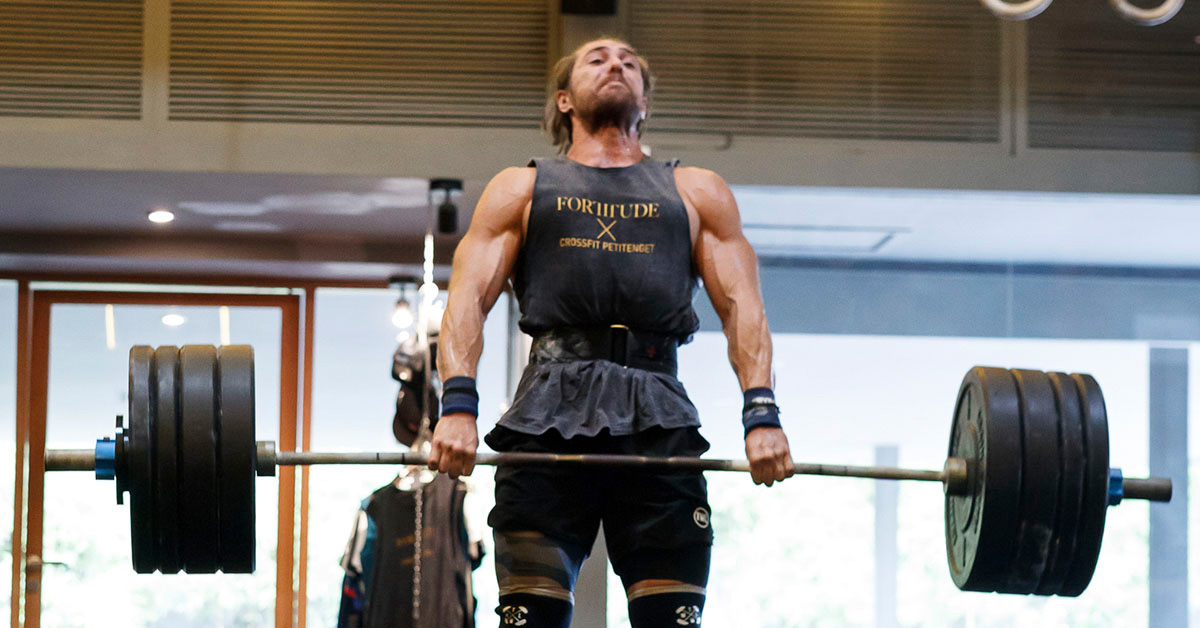
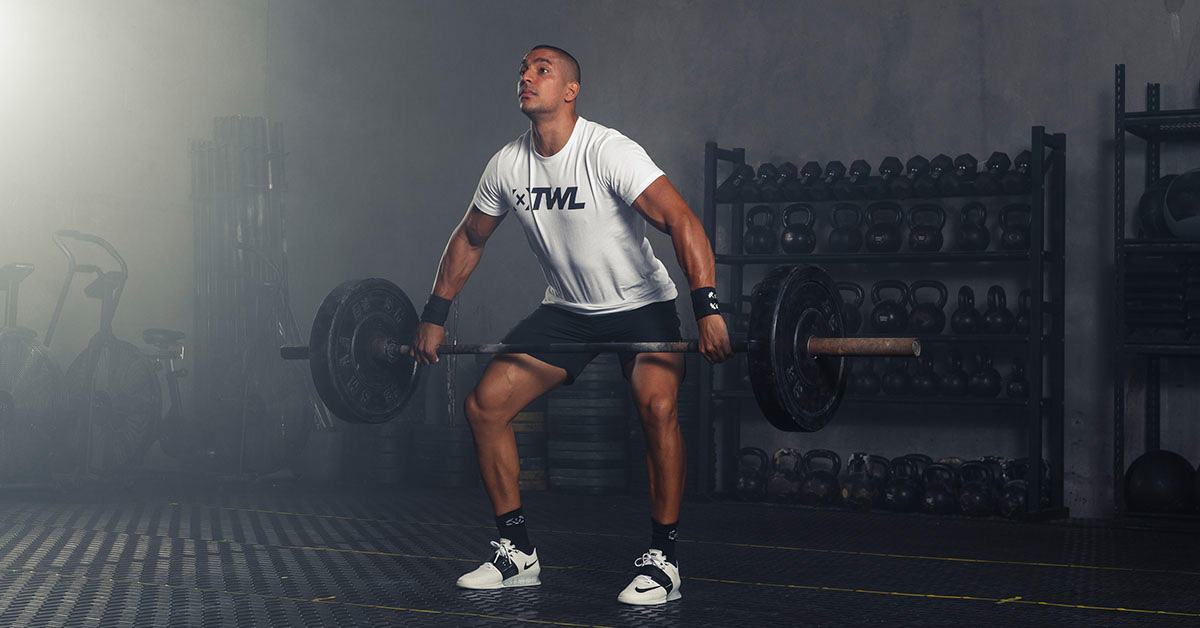
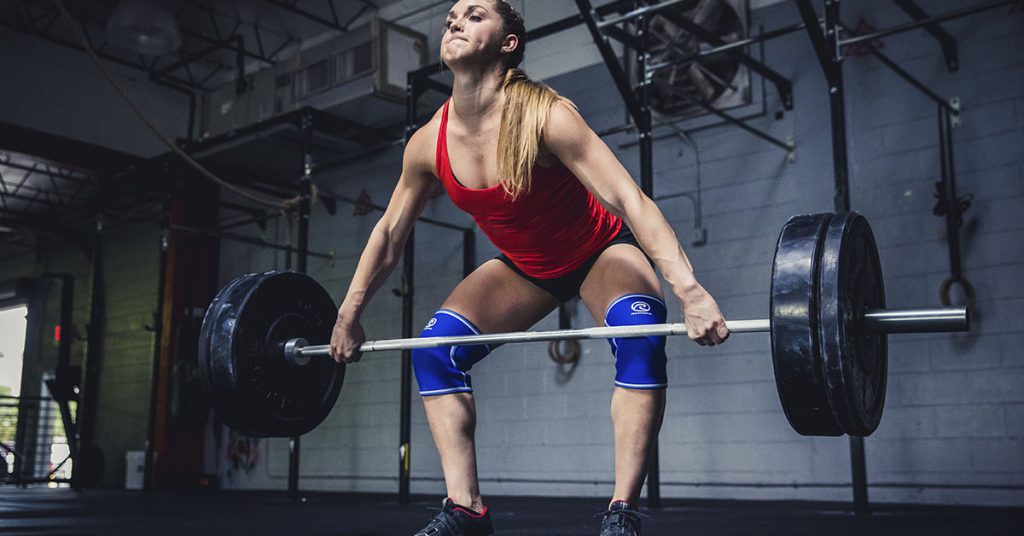
Female athlete doing snatch grip deadlift

You can probably guess what the snatch grip deadlift is, but do you know what the benefits are and why you should be doing them? In this blog, let’s break down the movement and talk about how it can help you in the gym.

Note: Even if you’re not an Olympic weightlifter, the snatch grip deadlift is still a good idea for you!

How to Do the Snatch Grip Deadlift

If you can snatch and you can deadlift, then you can deadlift with a snatch grip. Here’s how it goes:

  1. Stand with shins next to the bar, feet about shoulder-width apart (perhaps a little wider), and your knees soft.
  2. Grip the bar where you normally would for a snatch. A wider grip means that you’re going to have to travel lower to meet the bar. Your hips will end up being approximately parallel with the ground. Your shoulders should be above the bar.
  3. Squeezing your lats and keeping the bar close, extend your knees until the barbell is at your knees. Then, straighten your torso and knees to stand up to full extension.
  4. To return the weight, soften your knees and hinge forward at the hips until the barbell is at your knees.
  5. Bend your knees until the barbell meets the ground. This completes one rep.

We know that it sounds like a lot of details, and if you overthink it, you can make it harder than it truly is. Really, Steps 3-5 help you stay in the proper alignment so that your hips don’t shoot up before your back, or vice versa. But this is still a deadlift. Pick the weight up and set it down. That’s the main goal.

Here’s what it looks like:

5 Benefits of the Snatch Grip Deadlift

You’re not going to be able to deadlift as much with a snatch grip as you can with a traditional lift. It’s a different stimulus and offers a ton of benefits.

  1. It’s excellent for building strength in the posterior chain.
  2. It’s a spicy quad workout.
  3. It’ll help you snatch more since it both improves your positioning/technique and builds strength.
  4. Your deadlift numbers will also go up!
  5. Due to the wider grip, your lats have to work even harder, making this a great lat exercise.
  6. You get to practice being patient off the floor. Ripping the barbell off the ground sets you up for a poor or failed snatch. Patience is key.
  7. You can use this to strengthen your grip. Rely on your own strength for more moderate weights and higher reps. But as the weight climbs and the reps go down, it might be smart to use weightlifting straps. Tape and chalk can help, too.

Shop Now

View our complete collection of weightlifting straps.

Note that weightlifting belts aren’t super common for this one. It’s rare for an athlete to wear one to snatch, and the same usually goes for the snatch deadlift.

Take your time with the snatch grip deadlift! This is the part of the snatch that athletes often struggle with. Take your time, feel the burn, and you’re going to build significant strength.

5 Drills to Improve Your Snatch Technique

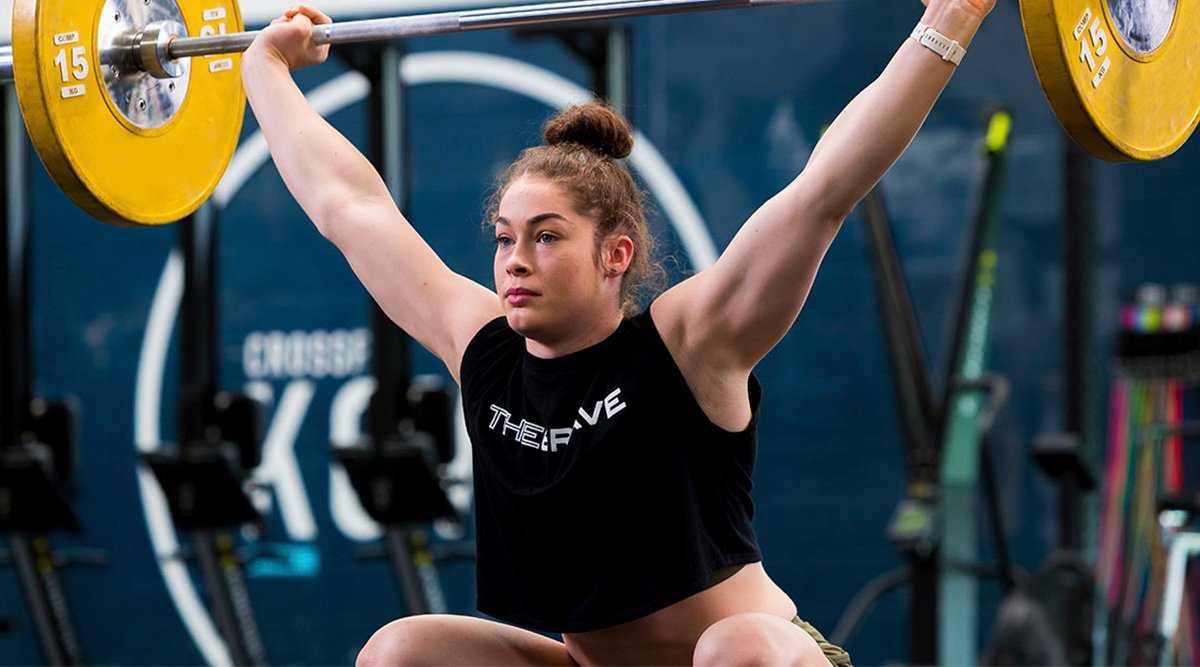
male athlete working on snatch technique

The snatch. Life’s last great mystery.

The snatch is one of the hardest skills to learn and is even harder to master. It takes time, patience, and reps upon reps upon reps to drill good mechanics into your body, which isn’t used to being asked to throw a load of weight directly overhead and catch it.

The snatch is an ace at exposing any of your weaknesses — big or small — and punishing you with a failed rep, so it’s important to drill your movements, mechanics, and positions at both light and heavy weights regularly. If perfectly executed, a snatch is a thing of beauty, making it a favourite on the ’gram.

Whether you are a bar humper, short puller, or crash-and-burner, these five drills will help build the right mechanics and develop your strength so you’re ready for your next 1RM test.

Shop Now

5 Drills to Improve Your Snatch Technique

1. Muscle Snatch

The muscle snatch is a fantastic strength and position-building drill that will help teach you to keep the bar close to your body and pull it high. The setup for the muscle snatch is identical to a normal snatch and should mimic the first pull. However, once the bar passes the knees and after a strong hip drive, you should focus on maintaining high elbows into a high pull and then aggressively turning your elbows under to press out overhead with locked legs.

2. Snatch Deadlift

A good snatch starts at the bottom. The snatch deadlift teaches proper positioning at the first pull and develops requisite strength in the hamstrings and lats to keep the bar close and into the hips. Start by creating tension on the bar before liftoff and then push the ground away through your feet, actively engage your lats to keep the bar close, and pull into your hips. Maintain this strong position with shoulders over the bar and pressure through your feet.

3. Heaving Snatch Balance

Do you have trouble in the catch? You have a strong pull but are regularly missing at the bottom? A heaving snatch balance teaches aggressive lockout and quickness under the barbell. Start with the barbell on your back and take your snatch grip. Perform a slight dip and drive the barbell overhead whilst stamping your feet into your squat position and dropping under the barbell. Finish with a strong snap of your elbows, pressing up into the barbell with a proud chest and eyes up.

4. Hang Snatch Pull

This one is great for the bar humpers (you know who you are). A hang snatch pull teaches you to brush the hips and pull up rather than bouncing or “humping” the bar out from your hips, causing more of a swinging motion. Starting in the power position, move to the hang, keeping a proud chest and shoulders over the bar, and then sweep the bar up your thighs, finishing with a pop of the hips and shrugging up.

5. Overhead Squat With Pause

If you power snatch more than you full snatch, it may be because you are not comfortable in the bottom position. Getting a lot of time and reps at the bottom of an overhead squat will improve mobility and flexibility and teach your body to be strong in this position. Drill this with both an empty barbell and close to your max snatch.

Ready to stop up on weightlifting equipment? Shop our collection today!

The Most Common Snatch Mistakes

The snatch is a complicated lift to master. If you’ve been practicing for a while and can’t seem to get it right, you may be battling one of these common snatch mistakes. Luckily, by checking out your own lifts on video, you can break it down to determine what is going on and where it might be going wrong.

The 4 Most Common Snatch Mistakes

Mistake #1: Blasting Off the Floor

Does an explosive movement start explosively? No. Take control of your bar.

A very common mistake that throws an entire lift off balance is cranking or blasting a barbell off of the floor. There are several reasons this doesn’t work. First, by whipping light bars off the floor, it does not prepare the lifter for the timing of a heavy barbell. Second, the lifter loses control immediately because the movement is wild, which leads to any number of mistakes.

two athletes snatching

Take control of your barbell when you start. The portion of the pull that starts off the snatch is often referred to as the “first pull,” which is between the floor and the knees. Slow it down enough to:

  • Maintain a strong and controlled back.
  • Pull back your tibias.
  • Avoid touching the knees.
  • Keep the bar very close.
  • Keep your shoulders and chest over the bar.

All of these points cannot be considered if the barbell is flying off the floor. And if you don’t master this with lighter weights, things certainly won’t go well with heavier ones.

https://www.instagram.com/p/B2FSPYLHbT3/

Mistake #2: Wobbly Knees

Correct an unstable pull or catch by pushing your knees out at the start position.

Stabilizing this lift has a lot to do with the glutes. Your glutes stabilize the hip movement and your back. Besides weak glutes, you may be forgetting to activate the glutes at all. Combat this by being aware of your knee position from the very start. Activating your glutes by pushing your knees out will solidify the start position and brace your back for the effort to come.

Pushing the knees out at the start position transfers nicely throughout the pull, helping you finish with more strength and confidence at the top. When the start position is as controlled and precise as possible, the rest of the lift is far sturdier, including the catch.

Mistake #3: Opening Too Early

athlete with bar overhead

Being a little too ambitious to get under the barbell can cause a lifter to open up the chest too soon, bringing the shoulders behind the bar before they should. “Covering the bar” is an expression used to describe the angle of the back, based on the flexion of the hips. The barbell is lifted off the floor with a combination of knee and hip extension, so maintaining a perfect ratio of extension in each joint helps to finish the pull in an ideal position, with maximal force and bar trajectory. If the hip extends prematurely, the bar is no longer being covered, which can lead to multiple problems, like:

  • Missing contact with the bar in the correct place.
  • Cutting the pull short.
  • Reduction in the maximal force of the pull.
  • A forward trajectory of the bar, or an “arc” in the bar path.
  • Painful contact with the pubic bone.

Cover the barbell as long as possible — right to the end of the pull — by keeping your shoulders and chest over the bar.

Mistake #4: Letting the Bar Get Away From You

Not contacting the bar in the right way at the hips is a result of letting the barbell get away from you. Keeping the bar close through the pull is a basic principle of snatching.

athlete at bottom of snatch

Losing contact with the bar can occur when the initial pull is wild and out of control, but it can also be a result of relaxed lats. The lats perform shoulder flexion, which is how the barbell remains close to the thighs through the pull portion. This also helps set the bar in the best position for you to get under it.

Maintain close contact with the bar by engaging your lats and pulling the bar horizontally toward your thighs, even when gravity wants to take it away!

Bonus Tip: Avoid This One Common Snatch Mistake

In an attempt to improve the snatch, some athletes will practice an excessive amount of accessory work. Don’t get us wrong — this is an excellent habit… to an extent. The challenge is this: You can perfect an accessory movement — like snatch pulls — and still have no idea how to implement it when it comes time to do the full lift. Do your accessories and then practice applying them to the lift. To improve your snatch, you must snatch.

https://www.instagram.com/p/B1IyQWnHjmd/

Remember that the weight doesn’t need to be heavy for you to put the work in. Even an empty bar can help you drastically improve.

Want a few more helpful cues for Olympic weightlifters? Check out this blog!
Want to read more about some common weightlifting myths? Read this blog!

The Most Common Mistakes People Make in the Overhead Squat

The overhead squat is one of the most difficult movements — not because of how it challenges strength, but because of the mobility and coordination required to perform it properly. A mobility restriction anywhere — in your ankles, hips, thoracic spine, shoulders — will not only prevent proper movement through the overhead squat but can also lead to injury due to the compensations (i.e., mistakes) your body makes while trying to complete the movement.

Here are some of the most common mistakes people make in the overhead squat, as well as corrections and mobility drills to prevent or correct them.

https://www.instagram.com/p/CAe8Xi0Djdp/

4 Common Mistakes in the Overhead Squat

1. Leaning Too Far Forward

Throughout the overhead squat, the bar should be stacked in line with your shoulders and midfoot and your elbows should be locked out, armpits facing slightly out. Sometimes, when an athlete lacks ankle mobility, they end up leaning their torso too far forward in order to achieve squat depth under the bar.

If this is you: Take some time to roll out and massage your calves, your feet, and your ankles. Focus on increasing your dorsiflexion. Then, with a PVC pipe, practice the overhead squat and try to keep your chest as upright as possible.

2. Holding the Bar Too Far Behind the Head

This mistake is often made in combination with the previous one. As you lower yourself into the squat, the bar should travel in a straight line up and down. However, if your torso is hinging too much, your arms will press the bar further behind your head in order to keep a straight bar path and maintain balance. At the bottom of the squat, your arms will be stretched behind you like wings, and if you have to bail out of the lift, you’ll have a hard time getting out of the bar’s way.

If this is you: As with the previous mistake, work on your ankle mobility and keeping an upright chest throughout the overhead squat. You may also want to roll out your hamstrings.

A post shared by The WOD Life (@thewodlife) on

3. Arching Your Back/Sticking Your Butt Out

Your spine should remain neutral throughout the overhead squat, but if you have restrictions in your shoulders or thoracic spine, you may find yourself arching your back and sticking your butt out as you lower yourself into the bottom of the squat.

If this is you: Before performing any more reps, tackle your shoulders with a lacrosse ball and your thoracic spine with a foam roller.

  • On your shoulders, locate tight or sore areas, apply pressure, and roll out.
  • For your thoracic spine, fold your arms across your chest and roll up and down on the foam roller. Be sure not to roll out your lower back, just your mid and upper back. Then, with the middle of your back on the roller, extend your thoracic spine backward, bringing your shoulders toward the floor and keeping your lower back neutral. Perform several reps.

Once you’ve mobilized, practice the overhead squat with a PVC, focusing on an upright torso and dropping your butt straight down.

View this post on Instagram

A post shared by The WOD Life (@thewodlife) on

4. Rounding Your Lower Back at the Bottom of the Squat

Also known as the “butt wink,” the excessive rounding of your lower back at the bottom of a squat (any squat, not just the overhead squat) destabilizes your pelvis and puts your spine in an unsafe position for moving a load.

To be clear, a minor butt wink typically isn’t anything to worry about. If it restricts your movement or causes pain, however, this is something that needs to be addressed.

If this is you: The butt wink is generally caused by mobility restrictions in the hips, hamstrings, or ankles, so take a break from squatting and focus on mobilizing those areas. Then, practice the overhead squat with a PVC and focus on maintaining a neutral spine throughout the movement. Have a coach or workout buddy double-check your form (keeping in mind that neutral is a range).

The overhead squat is a challenging movement, and mobility limitations are the primary cause of these common mistakes. But if you want a strong snatch and if you want to correct movement problems in your front or back squat, the overhead squat is one of the best drills to add to your training regimen.

Finding the right programming isn’t easy. We can help! Check out our squat program — gains are around the corner.


5 Things No One Tells You About Olympic Weightlifting

Discovering Olympic weightlifting is a beautiful gift. You might be thinking you’ve totally fallen in love — and the sport is so amazing that you could — but there are a few things the veterans of weightlifting know that no one else tells you about.

The two lifts in weightlifting, the snatch and clean and jerk, are unlike any other exercise performed in a typical gym. The lifts are highly technical and combine several movements into one, making them some of the most difficult and unique movement patterns you can master.

If we could impart some advice from bona fide weightlifters, it would be these five things no one tells you about Olympic weightlifting.

https://www.instagram.com/p/B0uLgNigB0p/

5 Things No One Tells You About Olympic Weightlifting

1. PRs Happen Less and Less Over Time

Initially, achieving personal records might come easy, but this is because you’re starting the sport with little to no experience. Thus, literally everything is a PR. Don’t expect this to continue at this rate, because as you improve, it’ll happen less often. Initial performance in lifting is not a sign of future performance.

We’ve all known someone who loved Olympic weightlifting until they realized they couldn’t set PRs at the same rate as they did in their first year of training. Then, all of the sudden, it’s common for the sport to lose its sparkle.

It’s common in lifting to fight for months or even years for a single kilo improvement. Weightlifting is a long-term game; put your head down and get the work done to find success.

A post shared by The WOD Life (@thewodlife) on

Never forget this: Progress isn’t linear. There are ups and downs the whole way.

2. You’ll Experience a Whole New Kind of Fatigue

We’re referring to nervous system fatigue, which is in addition to muscle fatigue and delayed onset muscle soreness. The loads being moved in weightlifting and the explosiveness of the movements demand huge adaptations from the nervous system. The central nervous system is responsible for getting motor units firing and increasing the force generated at maximal speeds. There is also intra-muscular and inter-muscular coordination — that is, the CNS coordinating how and when muscle fibers contract to produce the desired movement.

View this post on Instagram

A post shared by The WOD Life (@thewodlife) on

Ever notice you’re shaking even when the load isn’t that heavy? This is the nervous system learning the movement pattern and trying to coordinate what you are asking of it. Have you ever felt your body simply block the movements, like choking on a pull? This is the nervous system giving out, too tired to continue.

A clear sign of CNS fatigue is feeling training itself wasn’t particularly difficult but you still need to sleep extra hours. Give yourself time and space to rest. Eat healthy fats and vitamin- and mineral-rich foods to assist your nervous system in healing and resting.

3. Consistency Beats Out Talent Every Day

A post shared by The WOD Life (@thewodlife) on


The best way to describe people who succeed in weightlifting is that they have “grit.” According to the Oxford dictionary, grit is “courage and resolve, strength of character.” Talented athletes do not always become the best weightlifters because no matter how talented a person is, weightlifting is about being persistent. There is no off-season, training can be grueling, and it isn’t a game like many other sports. Having grit is the ability to persist through the hard times and stick to one’s goal, undeterred.

Staying persistent means training regularly and consistently, showing up even when you don’t feel like it, listening to your coach, and giving every rep your all.

4. It Takes 10,000 Repetitions to Master a Lift

You’ll need to be patient with your lifts. You need 10 times the training sessions to understand these movements compared to any other exercise. Learning weightlifting is more akin to learning an instrument than an exercise.

View this post on Instagram

A post shared by The WOD Life (@thewodlife) on

Repetition of the movement pattern as frequently as possible (loading is less important than consistency) is the best way to master the lifts. The elements of each lift are like learning chords on a piano. Perhaps you can hit the chord individually, but to smooth it out into a song takes hours of practice and years of dedication. Counting your repetitions each session is a measure of the volume of training. You’ll notice, unlike walking, rowing, or squatting, you are performing very few repetitions each training.

On a similar note, don’t underestimate practicing said repetitions with an empty bar or even a PVC pipe. Muscle memory is a game-changer, and when you practice with proper form, you’ll only be rewarded.

5. The Jerk Requires as Much Dedication as the Snatch

A post shared by The WOD Life (@thewodlife) on


The jerk is sometimes treated as an afterthought. This is partially because you can get away with poor technique quite a bit in the beginning, while the weight is light. Unilateral imbalances, poor mobility of the hips and shoulders, and poor overall technique will start to have an effect on training as loads approach true max.

At maximum loads, it’s a shame to wrestle with a heavy clean only to miss the split jerk. Spend time mastering foot placement and the mechanics of the lift at 90%RM by working off jerk boxes. Trying to correct the jerk with pressing or push pressing is a common mistake. To master the jerk… you should jerk!

It’s not just about overhead strength, either. Special attention must be paid to footwork. That’s where everything starts.

What else would you add to this list? Tell us in the comments below!

Why You Should Be Doing No-Contact Snatches

There are countless snatch variations that can make you stronger in the lift, but there’s one in particular often overlooked by athletes: the no-contact snatch.

The no-contact snatch mimics the traditional lift, except that the bar never touches your hips on the way up. Here’s Iceland Annie Thorisdottir knocking out a few reps, followed by traditional snatches.

https://www.instagram.com/p/B1Z0jr7HrdS/

Why Do We Care About No-Contact Snatches?

When the bar makes contact with your hips, it gives it a little extra “boost” to continue moving upward and overhead. And because hip contact helps send the bar overhead, removing that part of the lift makes it more difficult.

When you eliminate that piece of the puzzle, it forces you to really utilize other elements of the lift — like a rapid and powerful opening of the hips and a strong pull. So, if these are two areas you maybe struggle a little — and especially if you’re one of those lifters who forcefully “pops” the bar outward to keep it moving (a no-no) — no-contact snatches will be beneficial for you.

What Other Exercises Might Help?

Great question! There are two other drills in particular that you might find helpful, if you like no-contact snatches.

No-Hook Grip Snatches

This is exactly what it sounds like. You snatch without a hook grip, so your thumbs are outside your other fingers.

Similarly to no-contact snatches, no-hook grip snatches help you develop other parts of the lift because they remove something that puts you at a noticeable advantage: the hook grip.

No Feet Snatches

Try to keep your feet firmly planted throughout the entirety of the lift. Many of us execute a small jump mid-lift, and often, our stance widens a little bit. When you remove that element — you guessed it — you’re forced to find other ways to get the bar overhead.

Start incorporating these drills into your regular programming, and you’ll be stronger with better technique in no time.

Main image: Katrin Davidsdottir/Instagram

The Beginner’s Olympic Weightlifting Guide to the Snatch

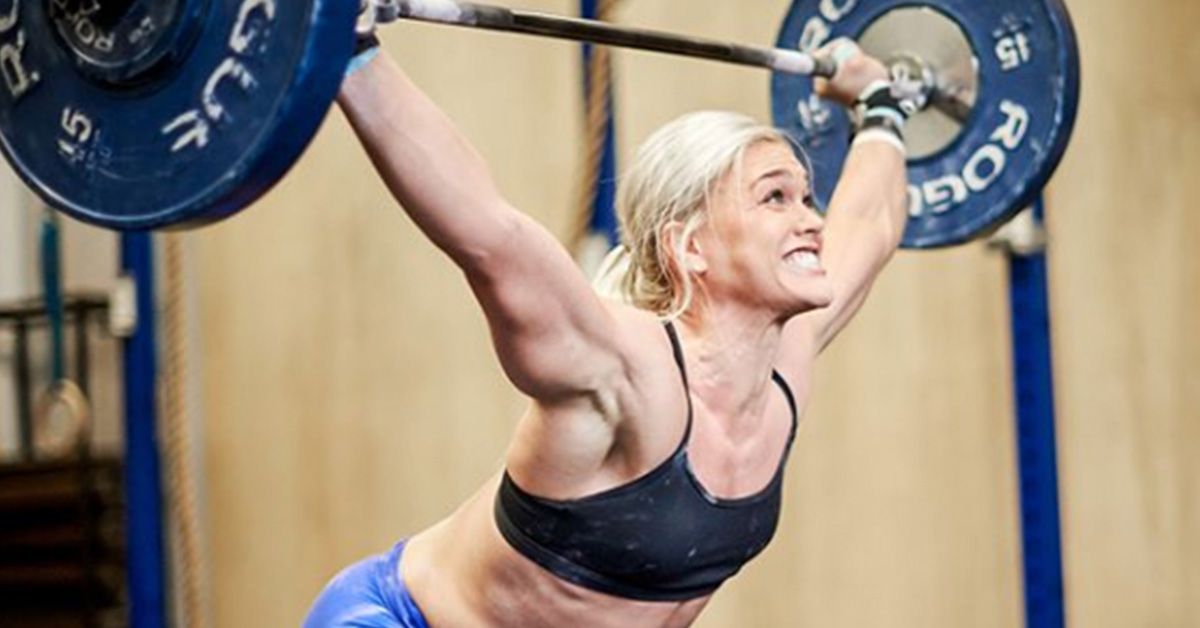
athlete performing the snatch

What’s the easiest way to intimidate an athlete on the first day they walk into the gym? Teach them the snatch. The snatch is unequivocally the hardest movement you can ever hope to perform with a barbell. It requires a mixture of strength, power, coordination, and mobility, all happening simultaneously, to make the lift — and even then you still might miss it! That is how razor thin the margin of error is. You either love it or hate it.

The perfect snatch is more of a journey than a destination. I cannot guarantee that by the end of this article you will be snatching like Mat Fraser or Tia-Clair Toomey, but hopefully this guide can help point you in the right direction and teach you a few tips and tricks along the way to make the snatch a less intimidating movement the next time you walk into the gym.

The Olympic Weightlifting Guide to the Snatch for Beginners

1. Keep Your Eyes Up

https://www.instagram.com/p/BuAJsRxnZjF/

This is one of those minor fixes that can make a world of difference for some athletes. The tendency, at least for most athletes, is to stare at the ground as they lift (probably because it’s a better option than staring directly into the butt of the person lifting in front of them). However, staring at the ground causes most athletes to not finish their lifts properly. Instead of finishing up and back, which causes the hips to open fully, they tend to finish over the bar, causing the lift to be left out in front.

Remember, your eyes (to an extent) lead everything. If your eyes are down, it brings the lift down.

Another benefit of keeping the eyes focused on the horizon is that it helps balance the athlete. By focusing on something off in the distance, it gives the athlete a reference point to look at throughout the duration of the lift.

2. Keep Your Arms Straight

This is snatching 101. In fact, one of the oldest sayings in the book is, “When the arms bend, the power ends.” The snatch is a leg-and-hip-driven movement. Period. By bending your arms, you are essentially turning this leg-hip movement into an arm exercise.

This is a tricky habit to break. Think about flexing your triceps before you even lift the bar off the ground to help keep those elbows locked out.

3. Get the Bar to Your Hips

https://www.instagram.com/p/BoldREynlBa/

Notice the phrasing here. It’s “get the bar to your hips,” not “get your hips to the bar” — a very important distinction. All we are trying to do, from the moment the bar lifts off the ground, is gain leverage over the bar, and we are at our mechanically most advantageous position with the bar in our hips.

The tendency is for athletes to get so wrapped up in getting the bar to make contact with their hips that they incorrectly thrust their hips forward to meet the bar. This, in turn, causes the bar to loop out in front and away from the athlete — something that we want to minimize from happening at all costs. The further away from you the bar moves, the heavier it gets.

Plus, while you might be able to manage a loopy bar path with lighter weights, as you go heavier, looping the bar out in front of you will often end in missed lifts.

The hips should meet the bar while moving vertically, not horizontally. The key here is to be patient with the lift. Let the bar get to your hips without rushing the turnover.

4. Keep Your Elbows High on the Turnover

After the bar leaves the hips, it’s important to pull your elbows high and to the outside to keep the bar as close as possible. The bar should almost ride your shirt on the way up. If the elbows drop too low or, heaven forbid, you keep your arms locked out the whole time, the bar will undoubtedly swing out in front of you. And if there is one common theme between all these points, it’s that the bar swinging away from you is a cardinal sin in weightlifting.

https://www.instagram.com/p/Bt0CGGnn0l9/

5. Be Active in the Receiving Position

All too often I see athletes snatch the bar, drop underneath, and pray that the bar lands where they need it to land. They don’t realize that the receiving position is an active position. You need to press up into the barbell and force it to land where you want it to land, not the other way around. Pressing up into the barbell will help get the shoulders into an active receiving position as well as make minor adjustments to the actual bar path.

https://www.instagram.com/p/Bri3QZ_H7Rm/

Remember where this position puts you and the bar: chest up, knees out, full feet in contact with the floor, and the bar slightly behind your head, armpits turned out.

6. Maintain Your Back Angle

As the barbell lifts off the ground, the back angle of the athlete should remain the same. Oftentimes, we see athletes lift their hips up disproportionately fast compared to the barbell — something that we like to affectionately call the “stripper-style snatch.” As I mentioned earlier, the goal is to gain leverage over the bar. Therefore, we want to stay over the bar as long as possible.

This means pushing the knees back as the barbell lifts off the floor and keeping the shoulders in front of the barbell. Different athletes will be able to “stay over the bar” for varying lengths of time depending on their limb length. Here is a great video from Catalyst Athletics demonstrating how some of the best lifters in the world stay over the bar.

https://www.instagram.com/p/Bn99onQnW7s/

7. Have a Static Start (When You’re New to the Lift)

But Mat does it!? Yes, it’s true that having a dynamic start before attempting a lift is commonplace at almost every level of Olympic weightlifting. However, with beginners, I encourage a more static start, as they’re still getting familiar with the lifts. This helps build proper body awareness and muscle memory. Otherwise, it’s as if the athlete is working from a different starting position every time.

Once athletes have graduated from the newbie stage and built a strong positional foundation, they can start experimenting with a more dynamic start.

8. Don’t Skimp on Positional/Skill Work

https://www.instagram.com/p/BpnYY_LFP6P/

This point cannot be overstated enough. Look, everyone wants to lift like Tia and Mat. Everyone wants to hit that marquee. Let’s rewind that and take another look at marquee lifts under the lights, because behind every one of those lifts are hours upon hours of positional/skill work. I mean, Mat has only been practicing Olympic lifting since about the age of 13.

Working the fundamentals, doing accessory work, and doing painstakingly boring mobility together make those big lifts possible. Working on the basics with the PVC or empty barbell for rep after rep is what builds good motor memory. Identifying weaknesses and hammering them through accessory movements like a snatch balance or snatch grip push press are what transform those weaknesses into strengths.

And mobility, do I even need to say it? Being able to comfortably catch a snatch in a rock-bottom position and sit there is half the battle. These are all the things that need practice. It’s not good enough to simply pick up a barbell and build to a max every single day. It’s the relentless pursuit of perfecting the basics that leads to those big moments.

5-Second Snatch Position Holds From Rob Forte

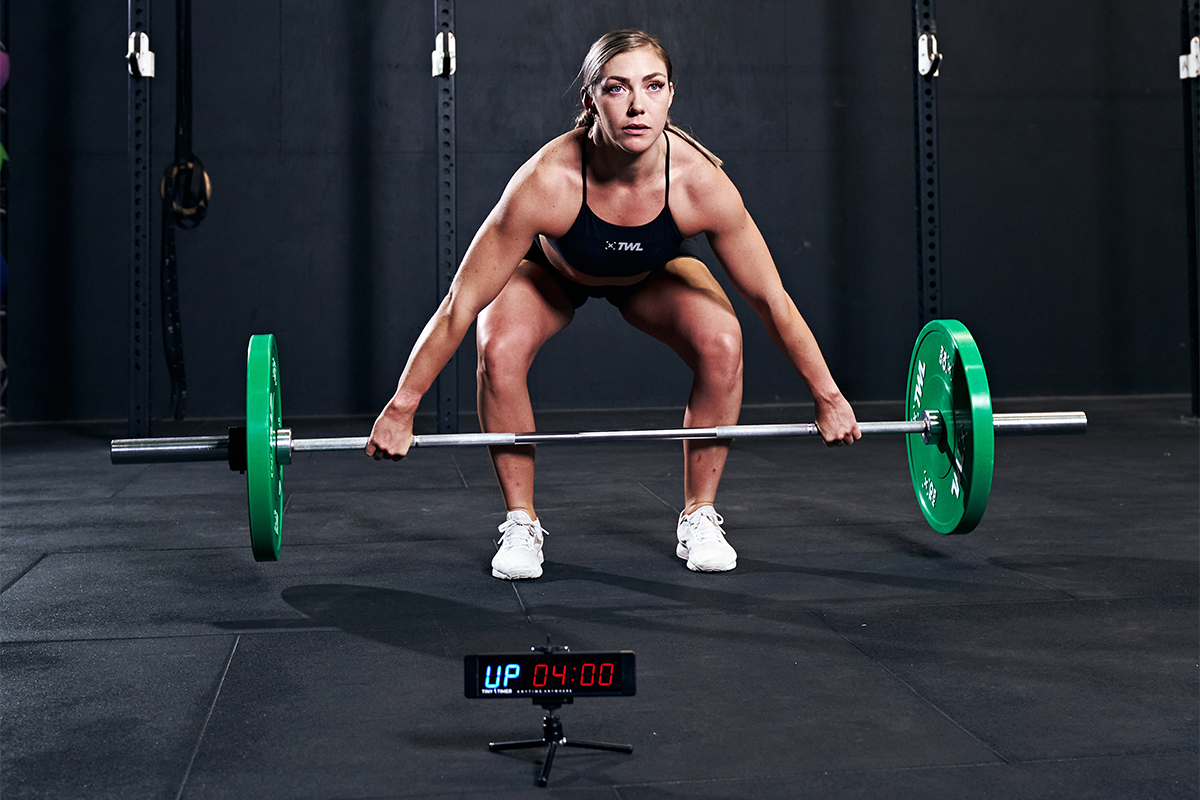
If you’ve ever snatched, then you know the bar feels heaviest right off the ground. Wouldn’t it make sense, then, to strengthen the path the bar takes from the floor to your hips? That’s exactly what Rob Forte did. By adding five-second pauses in five positions of his snatch deadlift — both on the way up and down — he worked on strengthening his positioning throughout the entire snatch pull. Holding for even three seconds is a serious challenge. Five? That’s just insane. Check out his skills!

Main image: Rob Forte/Instagram

Camille Leblanc-Bazinet’s Empty Bar Snatch Warm-Up

Lifting during a WOD is fun, which is probably why so many of us race through our warm-ups and load weight on the bar almost immediately, but a thorough warm-up with just the empty bar is not to be dismissed. This lays the foundation for a successful session, loosens your body up, establishes proper technique, and reinforces good habits. 2014’s fittest woman on earth knows this, and fortunately for us, Camille Leblanc-Bazinet shared one way she likes to warm up for snatching.

Main image: Camille Leblanc-Bazinet/Instagram

Brooke Ence Talks About Finding the Right Start Position

All of our proportions are different. Some of us have wider hips than others. Some have shorter femurs. These slight but important distinctions between us mean we will each set up for our lifts differently because our bodies bend and move in unique ways. Factor in how each athlete will feel comfortable with different positions, and you have countless ways to perform one lift. This was something Brooke Ence touched on in a recent Instagram video. After trying to change her snatch start position, she reverted back to what she already knows.

If is not broken, don’t fix it . I have spent a period of time TRYING to change my start position in my Snatch to a more narrow stance. A “typical” start position if you will; feet directly under my hips. Well, that position is just NOT for me. I am faster and stronger with a slightly wider start position . WHY DID I TRY TO CHANGE IT IN THE FIRST PLACE? Well, I wanted to be better about “jumping” or “moving my feet”. Turns out I can still have some movement even though my foot position barely changes. ?? at least now I can say that I CAN use a couple different t positions but I know for certain which one I will be the most successful with. ? wide stance with that deep catch… mmhmm ????? Guest coach / hype appearance: @jeanna_cianciarulo ? #itmakesence #weightlifting

A post shared by brookeence (@brookeence) on


Main image: Brooke Ence/Instagram

Try This Snatch Complex From Scott Panchik

The snatch is perhaps the most technical lift. It demands strength, speed, power, and flawless precision. Scott Panchik recently checked all of those off his list with this challenging snatch complex consisting of a high pull, hang snatch, snatch balance, and a back squat into a snatch balance. Will you try this one out at the gym?

A post shared by Scott Panchik (@scottpanchik) on

Main image: Scott Panchik/Instagram

Can You Really Be a Competitive Weightlifter and CrossFitter?

You’ve probably known of a few people who are capable of being both a competitive weightlifter and a competitive CrossFitter. The most famous is likely Tia-Clair Toomey, who won the 2017 CrossFit Games about one year after she represented Australia at the Rio Olympics. This is a highly unusual case, with most CrossFitters being decent lifters, and most lifters being decent CrossFitters (or amongst the best, as the case is with Mat Fraser — admittedly, a rare find).

So, why don’t we see more people performing at the competitive level in both?

What Each Sport Demands

Physiologically, weightlifting is at the very extreme end of the power versus endurance spectrum. Movements are so brief and so technical that it requires an incredible central nervous system as a part of training. Weightlifting is more about speed than anything else.

The other end of this spectrum would be Ironman triathletes and ultra-marathoners, who cannot be successful without training and improving their endurance over very long distances.

snatch

No matter your talent, there is no feasible way to train both ends of the spectrum and absolutely dominate in either one.

CrossFit fits into this picture somewhere in between the weightlifter and the marathon runner. Workouts include a little bit of everything: strength, endurance, and speed. It also relies on the same basic mobility, speed and movements we use in weightlifting.

Once you’ve trained strength and speed, what’s left is endurance. For weightlifters looking to tackle CrossFit at a higher level, this is often the hardest part. They’re not used to 20-minute WODs, because their movements take a matter of seconds.

Still, you can — without a doubt — train endurance. So, does that mean an athlete can realistically tackle both sports? There’s still more to this debate.

Being a Specialist Versus a Generalist

Besides endurance being a challenge, the biggest obstacle is a matter of logistics. There are so many skills to learn in CrossFit that the athletes are only moderately good at all of them, and never truly become a master at any of them. They are not the strongest athletes, not the most powerful, do not have the best endurance, are not the best gymnasts, etc. Learning many different skills makes the athletes very fit and well-rounded, but not a specialist in anything in particular. These are generalists.

regionals

While the CrossFitter is busy improving upon 20 different things (including lifting), the weightlifter is perfecting one: weightlifting. Because of this, it’s clear that a full-time weightlifter will likely be more proficient at weightlifting than a CrossFitter will ever be. Weightlifters are specialists.

The simple logistics make it difficult to imagine succeeding in both when training demands such different things. That being said, some people seem to make it work.

How You Might Make it Work

There have been some high-profile female CrossFit athletes, including Annie Thorisdottir, who have attended world-class weightlifting events such as the European championships and world championships. They are the best in their respective nation, performing at the bottom of the international field. They oftentimes represent countries with little or no high-level weightlifters or no weightlifting program, so the competition might not be as stiff. Regardless, simply qualifying to the international stage is an incredible feat and something to be immensely proud of.

If you think you would be happy performing in the top 20 or 30 in your nation, go for it! It might be difficult to take the platform at the IWF World Championships and the CrossFit Games in a single year; but don’t let that stop you from training your heart out. And remember, you can always compete on a local level for fun. After all, the number one priority should always be to enjoy what you’re doing — not win medals.

Can you train in both sports? Yes. Can you compete at a high level in both? It’s not likely. This doesn’t have to be a bad thing. You can still find a way to include both Olympic weightlifting and CrossFit into your programming so that spending time in the gym is always fulfilling.