
The Open always ends with a bang. This year is no exception.
https://www.instagram.com/p/B4lfBWgHVoy/
As you probably already realized, there are infinite ways to tackle this, and there’s no one-size-fits-all approach. It’s going to depend on your strengths, weaknesses, and where you are with your muscle-ups. Here are some general pointers.
5 Strategy Tips for 20.5
1. Don’t Go Until Failure!
Here’s the thing about muscle-ups and wall balls: They’re actually quite similar and use many of the same muscles. That’s why you don’t want to go to failure on either of them. If your MUs are gone, wall balls are going to be a nuisance, and vice versa.
Break these reps up early. That even goes for athletes with solid muscle-ups. You’re still going to need to take a break and preserve some of that strength.
Takeaway: Even if you can do any/all of these movements unbroken, don’t.
2. Use Your Rest Time Wisely
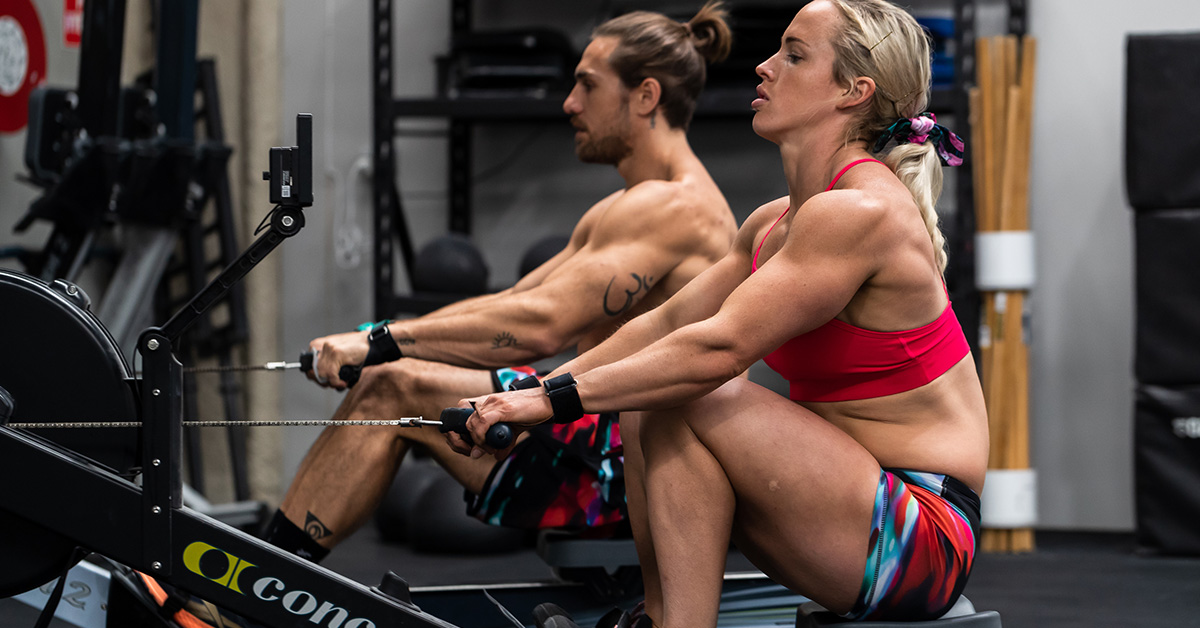
Yes, 20 minutes is a long time to keep moving, but you should aim to be efficient with the rest time you take between wall balls and muscle-ups. That means hopping on the rower! Treat rowing almost as your active recovery, and remember to use your legs. This way, your upper body will get more of a breather. Those calories will be easier to collect than you think. You can row slowly, but just keep moving.
3. If Your Muscle-Ups Are Pretty Solid…
… then aim to get them done first. Here’s why.
They’re the most technical of the three movements. They’re the hardest to complete and the easiest to get no-repped on. And once you start failing, it’s hard to come back.
For many athletes, this is going to mean that you want to get them out of the way sooner rather than later.
https://www.instagram.com/p/B4nau0UHrQr/
4. If Your Muscle-Ups Aren’t Quite There Yet…
… it’s totally okay! You should either consider scaling them, or plan to prioritize the wall balls and rowing, so that you’ll get the most out of those 20 minutes.
5. Why Not Do It Chipper-Style?
When we say this, we mean focusing on one movement at a time and completing all the reps before going onto the next movement.
While it might sound nice in theory, remember what we said earlier. You should consider breaking up the MUs and wall balls using the rowing as a buffer. Ideally, you should never stop moving during this 20 minutes.
If you do this as a chipper, you’ll be forced to take rest breaks and do nothing with that time except stand there. This will hurt your efficiency.
Make sure you’re ready for the wear and tear that 20.5 will bring. Shop with TWL today.