Altitude Masks for Running: What are the Benefits?

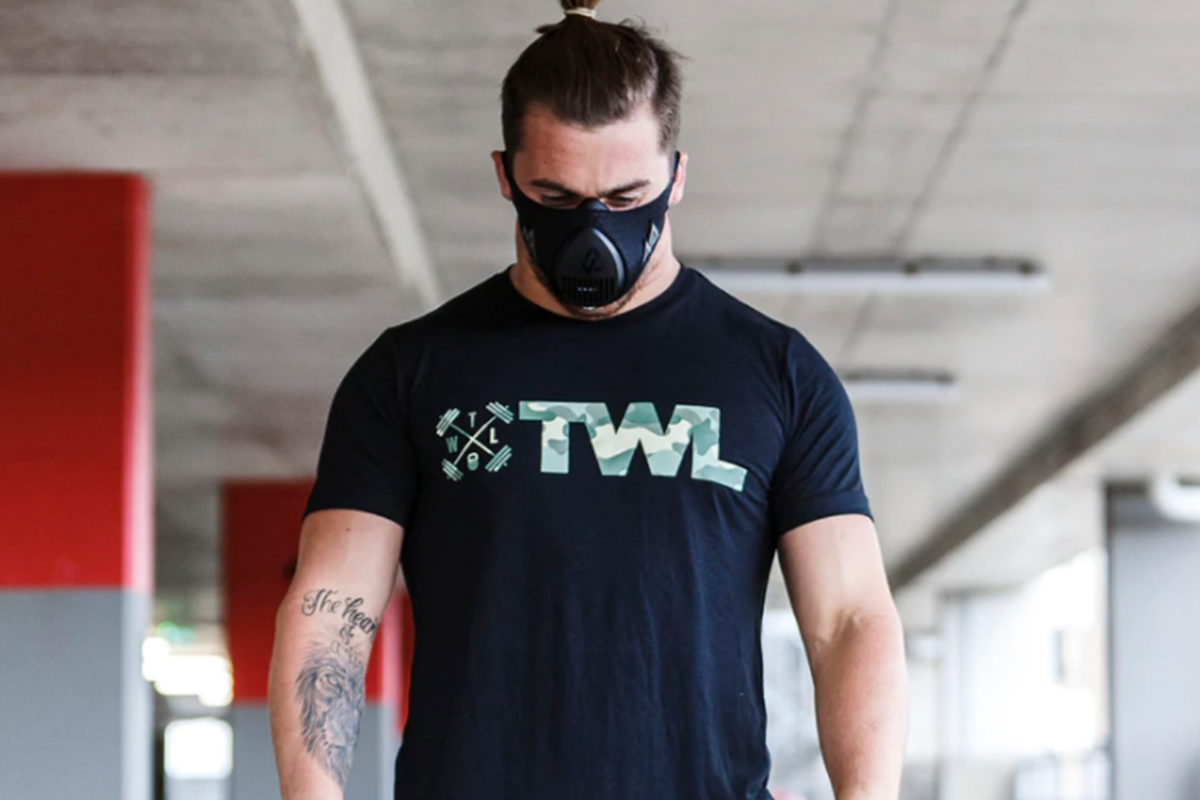
athlete wearing training mask

Running is already hard, but believe it or not, there are people out there who like to make it even more challenging. Altitude masks for running stress your body in unique ways to ultimately improve your cardiovascular endurance.

Let’s get into all the nitty-gritty details.

Wait, What are Altitude Masks for Running, Anyway?

Great question! Let’s first back up and talk about what the air is like higher up.

As you go higher above sea level (like if you’re climbing a mountain or traveling to a location that’s higher in elevation), the air pressure drops. This happens because of gravity: The earth’s gravity is pulling air as close to the ground as possible. But also, as altitude increases, the density decreases. This means that the number of gas molecules in the air goes down. This is why we say that the air is “thin.”

At higher altitudes, the air gets thinner and less compressed, and thus, it’s harder to breathe. In fact, this is why mountain climbers have to ascend (and descend) mountains gradually. A sudden and significant change in elevation can actually be dangerous! (But you don’t have to worry about that with altitude masks for running. It’s not anywhere close to that extreme.) 

Let’s keep going.

Let’s say you suddenly started training at a higher elevation — you would likely have a hard time. Maybe you’re moving slower and panting harder. You might notice that you fatigue faster and your heart is beating more quickly than it normally would be. That’s the change in altitude! However, over time, this would benefit your physical performance, because your body adapts to having to work harder.

What if you don’t live at a very high altitude, though, and still want to enjoy the benefits?

For those of us who are closer to sea level, there’s a way to “copy” the air higher up. Altitude masks — also called training masks or elevation training masks (ETMs) — simulate higher altitudes. athlete wearing altitude mask for running
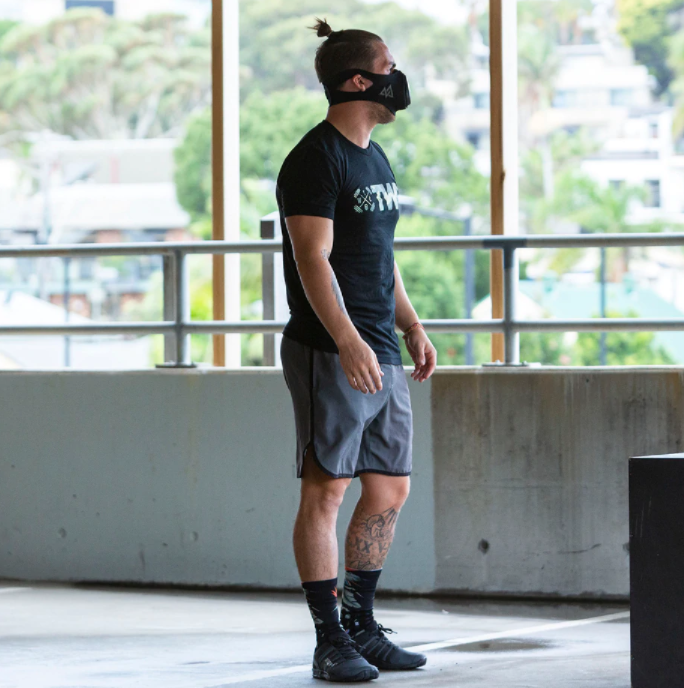
Training masks are designed to allow less oxygen to flow through, meaning you’re going to have a harder time breathing and catching your breath. As you train with this mask on, your body has no choice but to adjust to the reduced oxygen intake. Your heart and lungs will have to work harder.

The real magic lies in what happens when you take the mask off.

What are the Benefits of Altitude Masks for Running?

Because with the mask, your body has to adapt to working harder, when you remove it and have more oxygen again, you essentially get a big boost.

The most noticeable benefit might be improved aerobic capacity. Considering the way altitude masks work, they’re supposed to help you achieve your maximal oxygen intake, also called your VO2 max. This means that when you remove the mask and train without it, you shouldn’t get anywhere near that max, meaning you can train longer and harder. Sure enough, some research suggests that training masks can help improve your VO2 max.

In a nutshell, altitude masks increase the difficulty of your runs. Running a mile with a mask on is going to be considerably more challenging than doing so without the mask. However, when you then run that same mile without it, you should experience improved endurance and speed.

How Should You Use a Training Mask for Running?

Because we’re talking about reducing your oxygen intake, you should approach altitude masks for running with caution! If you’re at all uncertain that this is a wise approach for you, speak with your doctor first. Otherwise, move forward with these tips and considerations in mind:

  • Be sure you’re wearing the mask properly. It should be snug over your nose and mouth.
  • Play with the valves, if your mask allows that. Start with something only slightly different from your current elevation, so you don’t shock your body too much.
  • On a similar note, take it slowly! Don’t throw a mask on and go tackle your workout like you normally would. Start by wearing the mask around your house for short periods of time. Gradually introduce it into your training.
  • Listen to your body. If you start feeling lightheaded or dizzy, remove the mask immediately and take a break.

Can You Use an Altitude Mask for Other Types of Training?

What if running isn’t on your agenda much? Since the goal is simply to put your body under additional stress, you could technically wear an altitude mask for just about anything. Cyclists will sometimes wear them, in addition to functional fitness athletes and even weightlifters. Whatever sport or activity you may use it for, be sure to follow the guidelines above. Safety should always come first!
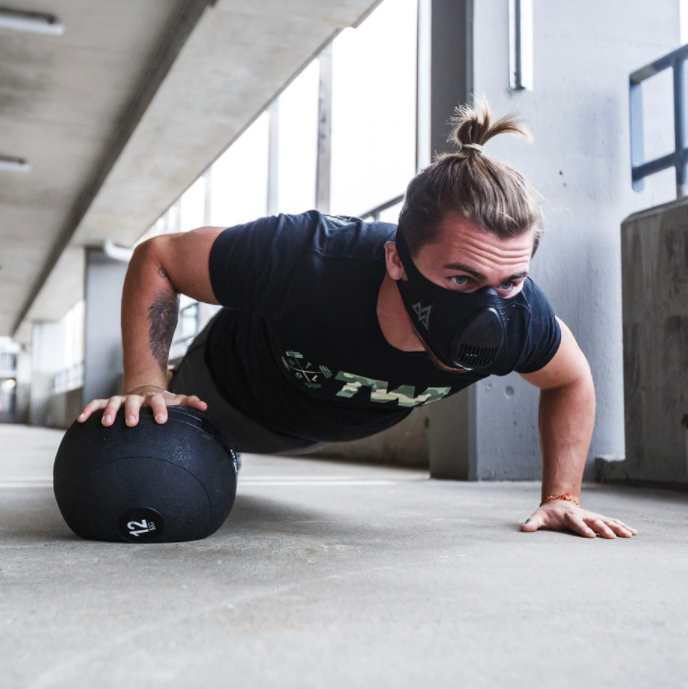
athlete wearing training mask

Aside from the physical benefits, there’s also a mental benefit to consider. An altitude mask is going to push you harder, meaning you’re likelier to enter the infamous “pain cave.” Working through this discomfort requires mental strength as much as physical strength. Learning how to literally breathe through it is going to teach you how to better manage those workouts that really push you to the edge.

Ready to try it out for yourself? Check out the Training Mask 3.0 and kick the intensity of your workouts up a notch.
Running With a Weighted Vest: What are the Benefits?

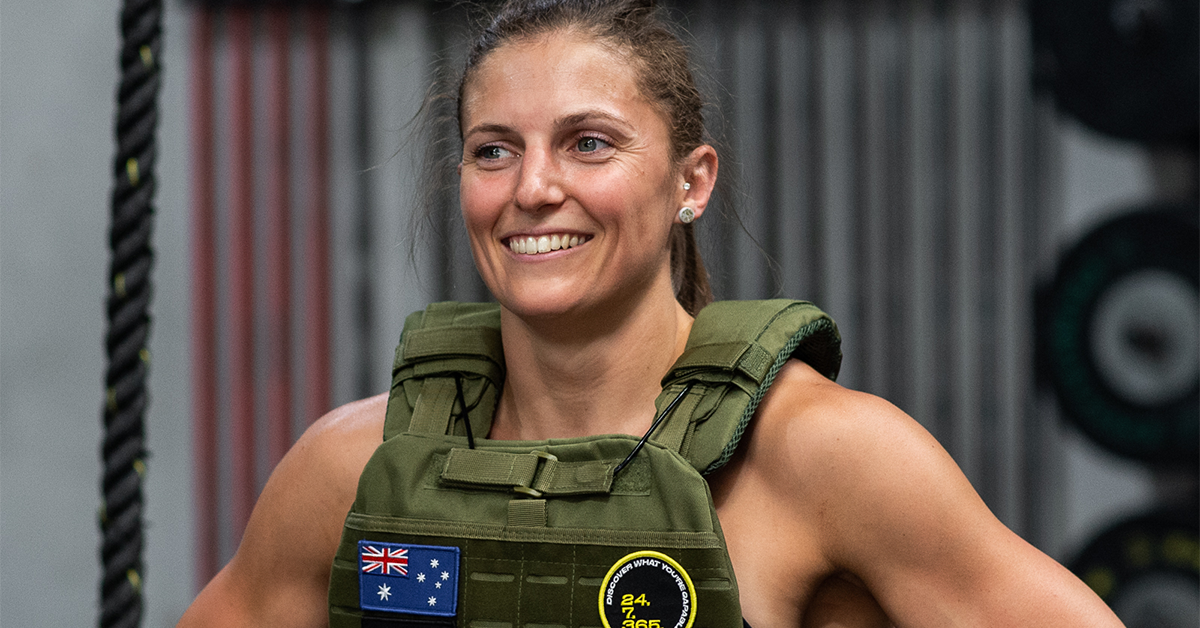
smiling woman running with a weighted vest

Very often, training with nothing but the weight of your own body can already feel like a challenge. However, there are times when we want to up the intensity by adding in a weighted vest. Even a simple run can feel like 10 times the workout when you carry a heavier load. Specifically, what are the benefits of running with a weighted vest?

Let’s discuss.

Shop Now

Wait! What’s a Weighted Vest?

Great question! In a nutshell, it’s a vest built with pockets that allow you to add or remove weight. There are all kinds of styles. Some hold metal plates while others use smaller weights.

6 Benefits of Running With a Weighted Vest

Important note: Before we get into it, we want to remind you that more isn’t always better. While adding a weighted vest to your run absolutely offers benefits, take care to listen to your body. If your upper body is starting to feel the stress of the extra weight, give yourself a break from it. Baby steps are key!

Now, let’s get into the many benefits.

1. The Cardiovascular Gains are Endless

Run half a mile as you normally would, and you might be a little winded. Run half a mile with a weighted vest, and your heart might be beating out of your chest.

Because there’s extra resistance (meaning the weighted running vest), your body has to work harder. Your lungs will be stronger, as will your VO2 max (which represents how well your body is able to use oxygen). Sure enough, one study found that endurance athletes who wore a vest ended up with an “improved running time to exhaustion.”

Don’t forget that once you take the weighted running vest off, you’ll be able to run faster and farther than you would’ve before. Your body has been conditioned to do more, and this will extend beyond running with a weighted vest.

2. Your Strength and Endurance Will Improve

Along with your heart health and capacity improving, your strength and endurance will too. Because your body is having to adapt to running with more weight, your muscles are going to have to work harder. And the really cool part here is that you can expect these benefits to carry over into other aspects of your training.

For example, aside from running, you might also notice improvements in your sprinting, jumping (hello, box jumps), and explosiveness — like your Olympic lifts feeling a little easier to manage.

That’s what’s so awesome about running with an adjustable weighted vest. It won’t only impact your running. Pretty cool, huh?

3. A Weighted Vest Offers Much-Needed Versatility

If you’re a CrossFit athlete, then you already know the overall idea of the sport: It’s constantly varied. Instead of being amazing at one thing, you train your body to try to be good at many different things. This means that you need to be forever switching up your exercises and workouts.

However, it’s all too easy for your body to become accustomed to certain movements, at which point they stop being challenging. The gains slow down and you might even hit a fitness plateau. Maybe you go for the same two-mile run you’ve always done, but when you return, you just feel… meh. It didn’t tax your body like it used to.

Wearing a weighted vest is a simple way to add a twist to your run and also give your body a surprise. It’s not used to this extra weight. It’s not conditioned to be able to handle it. This means that your system is going to have to work harder, getting you out of that fitness funk and teaching your body to adapt to new things. And that’s what CrossFit is all about.

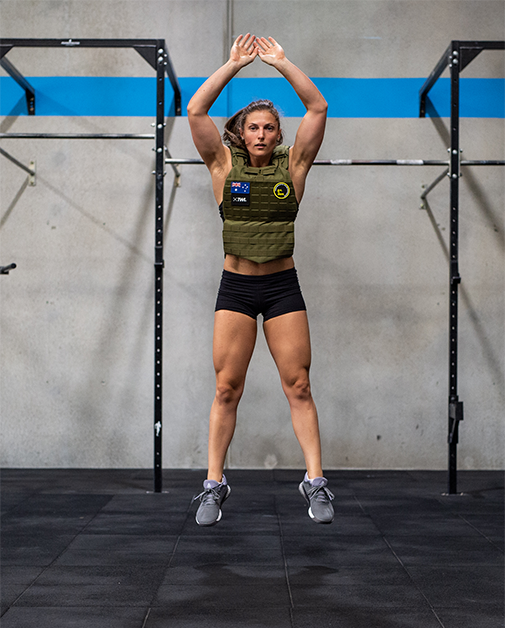
woman working out with a weighted vest

4. Your Bones Will be Stronger and Healthier

You’re probably noticing a pattern here, but we’ll repeat it again anyway. Your body is having to work harder due to the extra weight, and this means that your bones have to carry a heavier load. Over time, this can make them stronger and denser — which is especially important as we age and our bone health takes a hit.

5. You’ll Have Better Balance

Running with a weighted vest means that you’re carrying more weight toward the top of your body. This means that you’re going to have to fight harder to stay upright and in the proper position.

While more research is needed on this, training with a weighted vest seems to offer benefits when it comes to helping you find and maintain your center of gravity.

6. Your Posture Might Improve

It’s hard to get away with slouching when you’re running with a weighted vest. Your body isn’t going to like it, and you’re going to experience discomfort and even pain setting in early on.

A weighted vest almost forces you to improve your posture, which is a huge gift for the average human who spends most of their day slouching at a desk.

Psst! Learn more about the health risks of sitting too much.

An adjustable weighted running vest is a gentle but powerful reminder to keep your body in the proper alignment.

And we want to reiterate that you’ll continue to enjoy this benefit — all of these benefits, truthfully — long after you take the vest off. These benefits aren’t limited to your running. There is undeniable carry-over, and many other aspects of your training will reap the rewards, as well.

Tips for Using Your Weighted Vest

We want to leave you with a few pieces of advice for training with your weighted running vest.

Tip #1: Start Slow and Take Baby Steps

When we say “start slow,” we mean it. In fact, you might want to first wear the vest alone without any extra weight in it.

After you get your feet wet, start adding a few pounds/kilos at a time.

Going too hard out of the gate can lead to injury. Progress gradually and listen to your body. Like most other things in training, you need to work your way up. If you’re ever unsure of your approach (which is totally okay!), talk to your coach first. They’ll be able to offer you extra guidance to keep you safe and healthy.

Tip #2: Pack the Weight in Evenly

If you distribute the weight in the vest unevenly, best-case scenario, it’ll feel awkward, and worst-case scenario, it’ll knock you off-balance. Plus, having to support more weight on one side of your body over the other can lead to injury over time.

Make sure that you’re putting an even load from side to side.

Tip #3: Start on a Flat Terrain

Before you start running up and down hills or mountains, start on level ground. Running on an incline is already more challenging. Throwing in a weighted running vest will only increase the burn. One thing at a time!

Ready to up the intensity of your workouts? Shop The WOD Life’s selection of weighted vests.

5 Tips for Running Safely

In theory, running is the most accessible workout for athletes of all experience levels, locations, and fitness levels. You do not need to learn how to use fancy equipment. You do not need a gym membership. You do not need a teammate or partner. You technically do not even need shoes.

But just because something is more approachable does not mean novice runners are without apprehension. There is a lot to consider when learning how to run in a safe way. When I first started running in college, I just laced up my five-year-old Payless sneakers and gave it a shot. I ran only on treadmills. I ran striking my foot in unhealthy ways. I drastically increased my mileage quickly. I ran on old shoes and I ran without engaging in any other cross-training or mobility work. The result: increased cardio but excruciating shin splints.

Following are the “Five S’s” on running safely, which you need to consider to avoid injury.

5 Tips for Running Safely

1. The Shoes

Shoes are not “one size fits all.” Not only does everyone have varying foot length and width but also different needs in terms of arch support, stability, and shoe weight.

* Runners who have flat feet should consider shoes that provide torsional stability.
* Runners with high arches should seek out supportive shoes with ample midsole so the body weight is more evenly distributed.

In terms of shoe weight, lighter shoes are beneficial because they are less draining on the legs and support a faster stride. If you are a heel striker, however, consider looking for shoes with more cushioning, especially with shock absorbers in the heel, even if it means adding more weight to the shoes.

2. The Strides

A post shared by The WOD Life (@thewodlife) on

I confess I am a former heel striker. When a good song would come on, I would blast my music and run hard literally and figuratively. But an all-out effort does not mean that your foot should be slamming on the ground, too. To run safely, focus on perfecting your stride.

Some runners say they run on their tiptoes as if sneaking up on someone. Others focus on their back kick, over-exaggerating in training as if they are going to kick their backside. The main takeaway is your running mechanics are determined by the strength and flexibility of certain muscles and how your body is built, which means everyone’s stride will be different. Some universal tips to remember are the following:

* Shorter, purposeful strides are safer than over-extending your leg.
* Make sure your foot strikes under your knee, not in front of it.
* Relax your hands.
* Keep your arms bent at a 90-degree angle.

3. The Surfaces

Your body takes a pounding when running, but varying surfaces absorb the shock of each step differently. Concrete is hard, but it is typically consistent. Asphalt roads are easier to navigate and sprint, but it is tougher on your joints and filled with traffic. Grass and dirt surfaces put minimal impact on your joints, but they are unpredictable, which can lead to instant injuries.

Because no one surface is better than another, runners should mix it up to be a more well-rounded athlete.

4. The Stretches

A post shared by The WOD Life (@thewodlife) on


If you are a runner, stretching and doing mobility work are crucial to avoiding injuries. Some think the pre-run stretch is the most important, but they are mistaken. Your muscles need to warm up before a true run — think of a light mile or 10 minutes on the spin bike — but then after all that work, they are contracted and fatigued. They need to be stretched and elongated to keep from shortening and tearing.

Experts suggest doing dynamic stretches, such as side lunges, single leg deadlifts, and straight leg lateral swings before you pound the pavement, and static stretches focusing on your quads, hamstrings, calves, and hip flexors after your run when your muscles are pliable so you can achieve your deepest stretch.

5. The Safety Precautions

Running outside, especially on roads, can be dangerous. It is important to stay alert and keep your eyes up — even if you are listening to music or meditating — to avoid any hazards such as cars, fellow runners or cyclists, or changes in the road. If you are fitting in a workout early in the morning or late at night, be sure to wear bright colors and reflectors so you are visible to all around you. Also, consider running against traffic. It gives you the best visibility and gives oncoming cars the best visibility of you.

Running Versus Sprinting: Why You Need Both

Anyone who has slogged through a 5K, pushed through 15 intervals, or hung on in a 400m knows running and sprinting are as much a mental battle as they are a physical one. Running has excellent health and performance benefits, which include improvements in blood circulation, lung capacity and function, vo2 max, and muscle capillary density.

However, if you want to improve your raw capacity, burn calories, or just get your butt off the couch, steady-state running should be trained in conjunction with high-intensity sprint training. Here’s why the “running versus sprinting” battle demands a lot more attention from athletes.

A post shared by The WOD Life (@thewodlife) on

Running Versus Sprinting

Why Should I Run?

Steady-state running involves long durations (15–60 minutes) of sustainable, repeatable, and adequately paced sessions. The sessions are designed for the athlete to work at sub-maximal effort, consistently for the entire duration. If you have irregular breathing or “sloppy” running form or are being forced to slow or stop moving, then this may be a sign you have incorrect pacing. A good rule of thumb would be that you could say hello to a friend and ask how they are doing but not hold a full conversation.

Effectively programmed steady-state running will improve transportation of oxygen to the working muscles, provide ATP for PCR re-synthesis, and speed up recovery. It also helps build mental toughness and is great during a deload.

However, steady-state running does not stimulate glycolysis, recruit fast twitch fibres, or assist in the tolerance of waste products such as lactic acid.

How to do it: long, continuous session at sub-maximal threshold.
Example session: 10km run at sub-maximal pace.

A post shared by The WOD Life (@thewodlife) on

Why Should I Sprint?

Sprint training targets more fast-twitch muscle fibres, conducive to muscle size and power improvement. Couple this with the massive encouragement of protein synthesis and increase in anabolic hormones, sprinting is sitting pretty. Sprint training involves working at near-maximal or maximal effort, primarily on equal rest-to-work ratios or greater. Intervals such as this better force the body to tolerate and remove waste products that build up when working at high intensity, which means you can recover quicker and perform at a high output longer.

In addition, sprinting will help increase your overall power and speed output, giving you more to play with in your cleans, box jumps, assault bike, and more.

How to do it: repeated intervals at a high threshold.
Example: 12 x 100m max effort. 90-second rest in between for more anaerobic recruitment. 6 x 50m at 90%. 20-second rest in between for more aerobic recruitment.

A post shared by The WOD Life (@thewodlife) on

Ultimately, the well-rounded athlete incorporates different running adaptations to improve his/her overall performance. Functional fitness is a constantly varied test, which requires equal parts of endurance, as it does high-power output. If only one end of the spectrum is trained, we miss out on the vital performance output in other areas. In other words, steady-state running and sprinting are both important and deserve your attention.

“Some sessions are stars and some are stones, but in the end they are all rocks and we build upon them.” — Chrissie Wellington

Samantha Gash Desert Runner and ultra-marathon runner

Samantha Gash 1

Alison Wood sits down with Samantha Gash desert runner and ultra-marathoner who runs to help social change.

In 2010, 25 year old Australian, Samantha Gash became the first female and youngest person to complete RacingthePlanet’s Four Deserts Grand Slam in one calendar year. Her adventure, along with three others, Rick, Tremaine and Dave was captured in Jennifer Steinman’s documentary “Desert Runners”.

The Four Deserts Race Series commenced in 2002 and over the course of eight months each year racers travel to four different events; the Atacama Crossing in Chile, the Gobi March in China, the Sahara Race in Jordan and The Last Desert in Antarctica. At each event racers have five days to travel 250 kilometers (that’s six half marathons), with a rule that they are required to carry everything they need to survive in their own backpack.

The only support they receive is water and tent pit stops with highly qualified staff, all with experience in hiking, marathons and ultra marathons, and a medical team specializing in emergency and wilderness medicine.

I sat down with Sam to chat about her experience running four 250km ultra marathon’s in a year:

Let’s start at the beginning. Before the ultra-marathon’s, you ran your first marathon. A lady you met there told you about the Four Desert Grand slam, what made you enter?

I had just finished my first marathon and met Linda Quirk, a well-seasoned marathon runner who introduced me to the Four Desert Races. What attracted me to entering was the adventure element, sleeping in tents, spending time with strangers and the element of survival. The idea of travelling and adventure was the biggest draw card.

There was also the concept of possible failure, and see how you would go with something so unknown.

How did you train for before you started the four races?

In 2010, there was limited information on training and nutrition for ultra-marathons, let alone women running ultra-marathons. It was all trial and error, lots of error and injury, carrying random objects while running and sand running, also bikram yoga and training in a cold chamber at a University. I actually learnt more through doing the races than training for them.

Tell me more about your injury?

I was carrying too much weight while training and badly injured my ankle, six weeks out from the first race Atacama. Myotherapists, Chiropractors, Physios; the lot told me to just walk it and see how I’d go.

That first race I just walked and walked and learnt a lot by watching others from the back; and by the fourth day pushed hard and could actually run it. That’s what I’ve found through ultra-marathons; you can turn negatives into positives.

From that first race I developed a routine that I kept using; don’t go out too hard, keep a consistent and sustained effort in the first stages and give it all you’ve got and push yourself in the last couple. I just kept reminding myself, “Just keep moving, don’t stop for too long”.

SamGash2

Tell us a little about each of the races, what was the best and the worst?

I loved Egypt (Sahara Desert), whereas China (Gobi Desert) was the hardest and most intense; the weather was incredibly challenging, stifling in fact. It was the long stage (and on day 5) and was the longest that I had ever run before and it turned out to be 10kms longer than we expected. It was also not knowing what had happened to Nick [Nicholas Kruse was one of the runners that died after that leg of the race due to complications he suffered while getting heat stroke].

But for me it wasn’t about what was the best or worst, but was about the relationships formed with people. Everything gets stripped down, and you are doing what you love to do in a supportive environment.

You talked about self-reliance after Nick’s death in Gobi – how did that change the way you approached the races?

As much as I need to be in the “zone” to be able to race, I always ensure that I don’t push myself to the point of no return. There is always the possibility that you need to be able to bring yourself out of the race context and get yourself to safety/navigate/etc. If you are at your threshold, it is harder to pull yourself together to do so. It means I watch my hydration, keep vigilant on my energy stores so I don’t get depleted and if need be I make sure I team up with another runner if I feel the environment isn’t safe.

How long did each race take you?

It wasn’t about how long, but how you were ranked. In the end, it didn’t really matter. Each race is different; Antarctica for example was just racing in circles until you were told to stop due to inclement weather. Planning wise was it was hard! It would be like in a CrossFit WOD being told to keep doing box jumps “Until I say stop”, how do you pace yourself for that?

You said you’re a planner, how did you cope with not being able to control everything while on the races?

It was hard and always an internal battle to get an optimal result without structured training (no day or week is the same), you just have to learn to let it go. You have to remember are always at the mercy of the environment, or when you get back from a race, mercy of the real world; jobs, family, social life.

SamGash3

In the movie, the four runners featured, including yourself mentioned that you thrive on non-conformity, the unexpected, you push the boundaries. Do you think this is a pre-requisite for ultra-marathon runners?

Because they’re expensive to enter there is always a wide range of people entering – those who are ex road marathon runners, then you get people who think it’s a great way to travel, and then there are people like me that find it helps their personalities to get out there and try and get that ‘non-conformity’ in their lives and push the boundaries.

How does your training differ now to what it did before you started ultra-marathons?

It’s a lot more strategic that’s for sure! A resilient body equals a stronger and sturdy frame to base running off. There is more strength training, cross training, mobility work and flexibility, yoga still and isometric strength training too.

How did you juggle working and training, your social life?

Learn to live with sacrifice. Juggling a full time job, I’m committed to my family and relationship and now, the people I am drawn to are those in the same field. They understand what it takes.

What was in your pack and what was your nutrition like on each race?

We had to carry 2000 calories for each day as a minimum and consisted of high sodium foods like noodles, crushed up salt and vinegar chips, freeze dried foods, oats, hot chocolate and of course supplements too. I wore the same clothes each day, had specific compression gear, my sleeping bag, general survival and first aid gear too.

What kind of equipment did you carry and gear did you wear?

I used CW-X compression gear, and thoroughly believe in it, they are graded compression gear, as well as Injinji toe socks (to help prevent blisters from toe friction) and Brooks Cascadia runners.

Many sports, especially endurance ones are as much about mental awareness and preparation. What were some of your thoughts and personal mantra’s along the way?

You have to believe you were out there for the long haul. One of the mantra’s I did have was “I chose to be out there’, as hard as it got I kept reminding myself that it was my decision to be out there.

SamGash4

You’re the first woman, and the youngest to complete RacingthePlanet’s Four Deserts Grand slam, what does that mean to you?

It doesn’t matter to me that much at all. I am not phased or motivated by records, or want to claim the title. Although the title has allowed me to be, in some regards the position I am in now, and to get sponsorship.

How did doing the Four Deserts change you as a person?

It gave me perspective on what I care about and why I live my life the way I do. It’s allowed me to combine my love of adventure, travel and passion for social change.

What’s up next?

I’m currently training for a major project with UK ultra runner Mimi Anderson to take place between September 25th and October 27th. Over the 32 days we’ll be averaging 80 kilometers a day (two marathons a day) while traveling the South African Freedom Trail.

The charity project is called Freedom Runners, and we’re raising awareness and money to support a special enterprise business that will train South African women to manufacture and distribute low-cost, reusable feminine hygiene products to women and girls in the Namahadi Community.

Do you have any training advice or tips for Crossfitters from an ultra-marathon point of view in regard to training?

  • To think of the big picture always.
  • As an ultra runner strategy and sustainability is crucial.
  • e.g. if you get injured, it is always so tempting to come back asap as opposed to holding out till the injury is 100% (if not 100% recovered). a couple of weeks recovery versus 4 months of intensive rehabilitation can be the outcome for people who can’t think in the big picture
  • Get your nutrition as clean and nutritious as possible. I am a big advocate of consuming as many seasonal greens into your diet as possible.

RANDOM FACT: The film’s Director of Photography is Crossfit coach and fan Sevan Matossian. He has filmed a mini documentary with Greg Glassman, Directed and Filmed CrossFit documentary “Every second Counts and has previously filmed behind the scenes for CrossFit Games. Watch this interview with Sevan to find out how CrossFit helped him film Desert Runners.

  ___________________

Alison Wood, 27 is a novice CrossFitter who goes to Crossfit Darwin, marketing professional and crafter currently residing in Darwin, NT.  Follow her own blog North of Here for lifestyle and fitness posts or join her on Facebook.  

Screen Shot 2014-02-21 at 4.42.19 AM