Watch This Woman Deadlift More Than 200 Pounds — At 80 Years Old

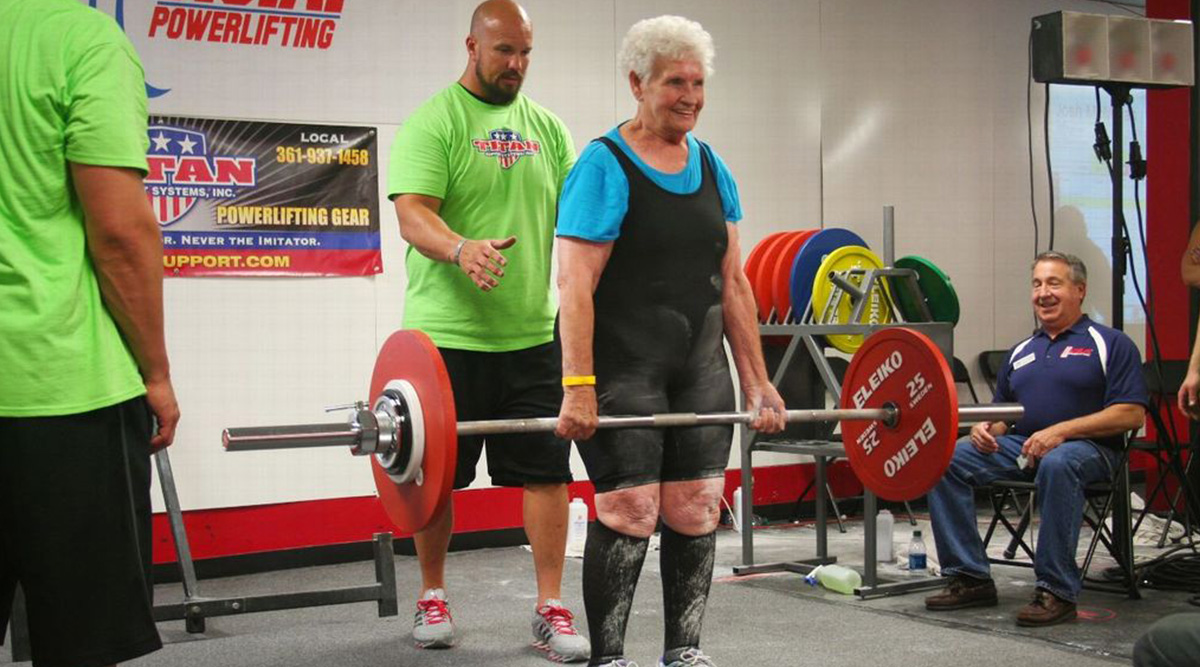
Fitness doesn’t recognize age. It doesn’t care how old you are. The number can’t stop you — only you can stop you. That’s one huge lesson we can all learn from Shirley Webb. This powerlifter knows no boundaries, and at 80 years young, she’s executing 231-pound deadlifts with ease. That’s not all she’s done, though, because in an interview with Girls Who Powerlift, she shares she once did 255 pounds in training!

Watch and be inspired.

Main image: Girls Who Powerlift

The Essential Starter Kit for Powerlifting

Have you started thinking about powerlifting more often in the gym? You’re not alone. Powerlifting is the ultimate strength sport that translates across countless other sports. Lifting heavy is vital to achieving your fitness goals because the stress you put your muscles through followed by the subsequent healing process is ultimately what makes you grow stronger.

Now, what gear do you need to get off on the right foot? We’re so glad you asked. Here are four things every powerlifter needs.

1. A Really Sturdy Weightlifting Belt

While you shouldn’t rely on a belt for light to moderate weights (say, when you’re working between 60% and 70% of your personal best — in which case, let your core do the job), there will inevitably come a day when you’re repping out much heavier loads or maxing out singles. The right belt will both provide extra protection to your lower torso and help keep your core in the proper position to lift a few more kilos than you would otherwise. It’s about staying safe and also putting yourself in the best position to lift as heavy as you can.

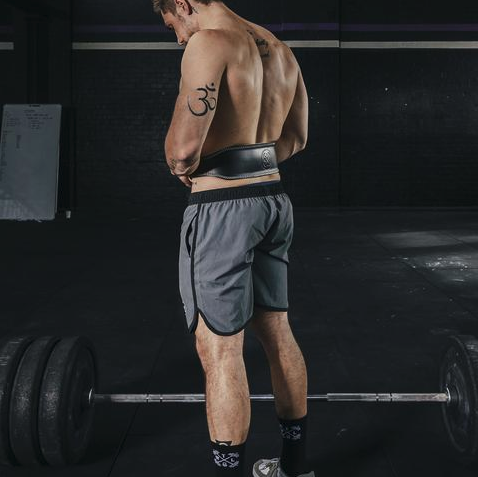
Powerlifting is unique because these athletes lift so much more than most others. This calls for an exceptionally durable belt that can rise to the challenge. We love this padded leather lifting belt. It’s super comfortable while providing maximum support, and the double prong closure means that thing isn’t going to budge.

powerlifting belt

2. Comfortable But Strong Wrist Wraps

Wrist pain is one of the most common complaints amongst weightlifters, especially newbies. While you may not have much need for wrist wraps for deadlifts, during the bench press and even back squats, the extra support really comes in handy. Wrist wraps do an excellent job stabilizing and keeping the wrist in a neutral and secure position so that it doesn’t hyperextend while managing a heavy load.

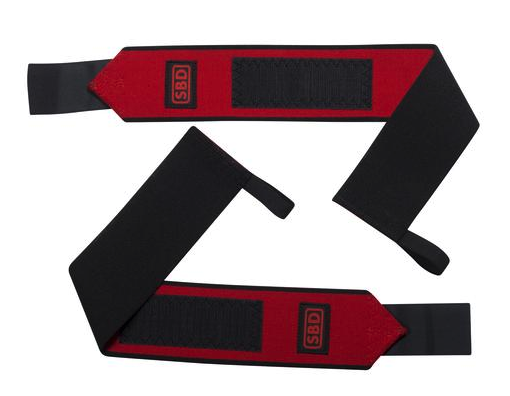
While you should always be sure to work on wrist strength and mobility, having wraps to give a little extra security is certainly a smart move. The SBD wrist wraps are always a good choice and a go-to in the powerlifting and Strongman communities. They’re very stiff but still offer some flexibility.

powerlifting wrist wraps

3. Reliable Knee Wraps

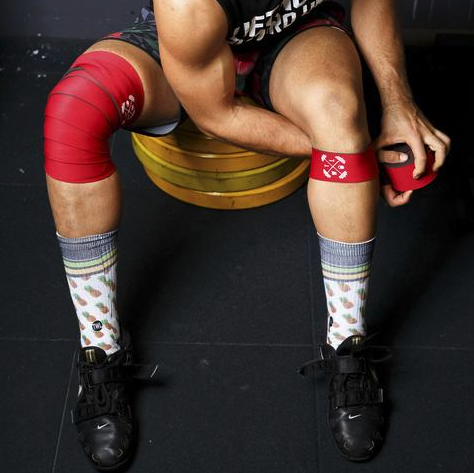
Knee wraps are favored and highly recommended by powerlifters, because they provide compression, warmth, and therefore stability to creaky joints, particularly when performing squat movements of any kind. Knee wraps can help prevent unnecessary damage and even injury. We’re huge fans of these neoprene knee wraps because they actually offer the best of knee wraps and knee sleeves. Win!

powerlifting knee wraps

4. The Proper Footwear

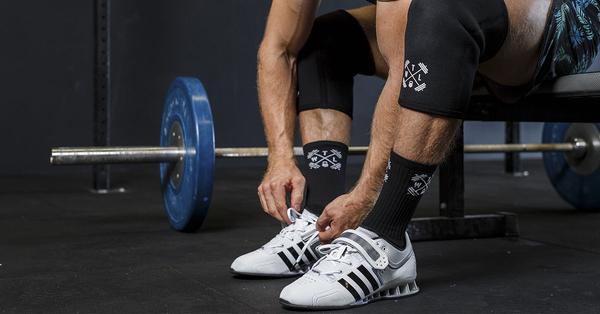
You have a lot of options when it comes to shoes. If you’re not quite sure yet which direction to go in, the Adidas Adipower is always a safe bet. This is an excellent all-around weightlifting shoe and provides the much-needed stability to give you the powerful stance necessary for deadlifts and back squats. Everything starts with your feet and they’re what connect you to the ground, so treat ’em right!

powerlifting shoes

Set yourself up for success and head to the gym equipped with all the best gear. Shop with TWL today!

5 Common Misconceptions About Powerlifting

Powerlifting – the name says it all. This sport is one that will take a whole lot of energy, effort, and (of course!) power to get right. While it’s something most athletes should try to incorporate into their training, you may have heard some nasty rumors about it. Let’s take a look at some of the most common powerlifting misconceptions and why definitely you shouldn’t believe them.

1. What Happens at the Gym Stays at the Gym

Powerlifting is not just a hobby – it’s a lifestyle. It’s not just about having all the right lifting gear and learning the movements. It’s about every single thing you do. When you undertake a training regime like this one, it will affect all areas of your life. Everything from how much sleep you get and what you eat to how you spend your downtime will impact how you perform. Looking after your wellbeing and your body is key.

Many powerlifters find it hard to adapt when they first start out. That’s natural.

2. Powerlifting is All About the Weight You Lift

One of the most common misconceptions when it comes to powerlifting is it’s all about how much weight you can bear. Wrong. Just because you can lift extreme weights doesn’t mean you’re a pro. Likewise, if you’re lifting numbers on the lower end, that’s not to say you should be underestimated as an athlete. Focusing merely on how much weight you can take is a mistake.

A post shared by The WOD Life (@thewodlife) on

Powerlifting truly is an art form. It’s about technique, form, and positioning. While it might take years to get all of the above right, it’s worth the time you spend on it. The right form will mean your lifts are not only safe but also extremely effective — and also that you’ll keep progressing in your numbers.

3. The More You Train, the Easier it Gets

With most things in life, the more you practice and train, the easier it becomes. Powerlifting is different. In the first few years, you will make sustainable progress. You will get stronger and stronger as you train. What’s more, you may be forgiven for thinking the trend will continue in the same way for many years to come. The truth is, it won’t.

As you become stronger and the weights get heavier, it gets harder to progress. The misconception that things will only get easier is one that’s likely to hold you back in the long term. You have to make peace with the idea that your training will steadily get harder. Keep in mind your blood, sweat, and tears will all be worth it in the end. It’s not supposed to be easy.

A post shared by Stefanie Cohen (@steficohen) on

4. You Can Get Away With Eating Anything

True, lifting weights builds muscle, and muscle burns a lot of calories. Does this mean you’ll likely need more food to properly fuel your body? Yes. Does this mean you can eat anything you want and get away with it? No. Training is one half of the equation; nutrition is the other. You still need to eat for fuel and for your sport.

Even if moving up a weight class is your ultimate goal, you still need to do so in a healthy manner. Your new training program will put a lot of strain on your body, so getting all the right nutrients will be required for effective recovery. Create an eating plan that caters to your body’s needs.

5. It’s Not a Community Sport


You might execute the lifts alone, but don’t make the mistake of thinking this is a lonely sport. The powerlifting community is an open and welcoming one. Everyone who lifts understands it’s anything but an easy game. The physical and mental toll it takes on you is not a burden you should have to shoulder by yourself — and you don’t have to.

From other athletes to coaches, this lifestyle opens you up to a variety of people, all of whom will offer you support and guidance along the way. These individuals will understand just what you’re going through and how hard you’re working. Trust them.

While there are loads of misconceptions in the world of powerlifting, one thing’s for sure: dedicating time and energy to training is one of the most fulfilling things you will ever do. Whether you’re new to the powerlifting world or a real pro, there’s so much to be gained from the sport. Forget the rumors you’ve heard and get training!

Need to gear up for your next session? Shop for weightlifting gear and accessories at The WOD Life today!

Main image: Stefanie Cohen/Instagram

Powerlifting: 5 Simple Tips for Getting Started

Powerlifting is intimidating. The music, the energy, the behemoth human beings at the top of the sport (see: The Moutain) — everything about powerlifting screams hardcore. It’s even more intimidating when you walk through the doors of your nearest powerlifting gym without the slightest idea of what to do. That’s where we come in. Here are five useful tips to get your bearings in the powerlifting world.

Find a Program and Stick With It

Do you know what’s more important than choosing the right program? Sticking with it. There are a ton of beginner-friendly powerlifting programs littered across the web. Whether you choose something like Wendler 5/3/1, The Texas Method, Starting Strength, Candito’s Linear Progression, or something else, it doesn’t matter. What’s more important is being willing to commit to a program long-term so you can actually see some progress.

A post shared by Stefanie Cohen (@steficohen) on


All these programs are effective and you will, without a shadow of a doubt, get stronger no matter which one you choose. But all too often I see athletes bounce from program to program faster than Fraser can take down a pint of Ben and Jerry’s. Most programs are designed with intent and purpose — sometimes it takes a while before you start seeing significant gains. It takes discipline to be able to follow a program to completion rather than chasing the seemingly greener grass of another program.

Don’t Overcomplicate Things

Have you ever seen a video of a guy squatting with chain on top of chain draped over the bar? Pretty badass, right? I won’t lie: it is, but it’s not really necessary for a beginner. When you’re new to the sport or lifting in general, you can make tremendous gains following a pretty simplistic linear program. The chains, the bands, the Duffalo bar all look great for Instagram, but usually, those athletes have essentially maxed out their potential for growth on a linear program and need to get creative to break through plateaus. Don’t over complicate things. Focus on the main lifts plus a ton of accessory work and then, when the time comes, you’ll be ready for all the bells and whistles.

Find a Coach or Someone You Trust

Finding a coach — or better yet, a powerlifting gym — is paramount to this whole process. You don’t want to end up in one of those “weightlifting fails” videos where someone records you working out from across the gym. Before you start moving any sort of heavy load, it’s of the utmost importance a trained professional teaches you the basics. Lifting weights is fun, but it’s not a joke. And nothing can extinguish the fire to want to get in shape faster than a couple of avoidable injuries right out of the gate. Seek out a trained professional — no, YouTube doesn’t count — that will watch you move and make the necessary corrections. Creating a strong foundation is the key to longevity in this sport.

Gear Up

Before I give any recommendations, I will say this: it’s easy to go off the deep end here. I see people who walk through the door day one in basketball shorts and a baggy tee turn around a week later and they’re dressed head to toe in the latest and greatest gear. Now, that isn’t to say some gear isn’t necessary. In powerlifting, the gear isn’t so much a fashion statement as it is a necessity. The four pieces of powerlifting gear you should definitely consider are shoes, belts, straps, and wraps.

Shoes

For the shoes, consider something with a smaller heel to toe drop. It’s for this reason you see a lot of lifters wearing Converse All-Stars. But nowadays, there are a ton of quality shoes to choose from that are sturdy and comfortable. If powerlifting is one element of fitness for you and you still dabble in other sports, we highly recommend a more versatile shoe that will get you through everything, like the Adidas Adipower. It’s got the best of every world.

A post shared by The WOD Life (@thewodlife) on

Straps

While it’s always a good idea to build grip strength, eventually, your grip will become the limiting factor, as opposed to your body strength. Powerlifting straps are an excellent idea for those heavy deadlifts. They take the pressure off your hands and fingers so the weight hangs more effortlessly — meaning you don’t have to maintain such an exhausting death grip on it. This often translates to heavier lifts for an athlete.

Belts

In powerlifting, you lift so much more than you would in another sport. Thus, what matters is having a belt that’s incredibly strong and sturdy. Remember, you’re only doing, at most, a few reps at a time. If the belt is a bit more challenging to get in and out of, that’s actually a good sign. Look for a leather belt with a double prong closure.

Wraps

Lastly, you need wraps. Whether they’re for your wrists or knees (or both!), comfort and functionality go hand in hand. For your lower extremities, some athletes prefer knee sleeves, while some prefer to wrap their knees like a mummy. For the upper body, some like wrist wraps that tie, while others like Velcro. Test out different gear, find what works for you, and stick with it. You’ll be thankful for the extra compression and support, and your joints will too.

A post shared by The WOD Life (@thewodlife) on

Don’t Be a Hero

There should be a light-up billboard outside of every gym around the world that says this! This is the easiest concept in the world to wrap your head around but the hardest to put into practice. Maybe it comes with age, but the ability to listen and understand what your body is telling you is an invaluable skill in the weight room. If it feels sketchy, it’s probably sketchy. If you can barely keep your eyes open, maybe you should go home and get some rest so you can train hard tomorrow. Or my favorite, just because you saw something online doesn’t mean it’s effective, practical, or safe.

Be smart. Find someone you trust — a coach who knows what they’re doing. Learn to listen to your body. There are no shortcuts to getting stronger. It’s a long, long road with ups and downs, triumphs and setbacks, but nevertheless, it’s a journey worth taking.

Main image: Heather Connor/Instagram

Why Your Training Should Include Powerlifting

There’s something we love about labeling ourselves as athletes. We take pride in being able to say we’re a functional fitness athlete, an Olympic weightlifter, a powerlifter. We do this so much, we forget the many benefits you can enjoy when you take a little from each sport. Regardless of what your path is or where your focus lie, if you’re not incorporating at least a little bit of powerlifting in your training, you’re missing out on substantial gains. Here are just a few reasons it’s so good for you.

Compound Movements Do the Body Good

The three main lifts which make up powerlifting are the deadlift, bench press and back squat — all of which are compound movements. As we’ve discussed in the past, compound movements are exercises that work several muscles or muscle groups at once. Think of the exact opposite of something like bicep curls.

One of the reasons compound movements are so good for you is because they work a ton of muscle — like your quads, glutes and back — you need to safely and effectively perform certain tasks. In fact, squats specifically engage more than 200 muscles!

If you think this won’t translate to another sport, guess again. Every athlete stands to benefit from a little powerlifting.

They Also Make for an Efficient Workout

Let’s face it: a lot of us are short on time. That means we have to make the very best use of our sweat sesh. If you only have 45 minutes to train, compound movements are the smartest you can do. You’re basically getting multiple workouts in one. Couple that with a quick tabata or EMOM, and you have the makings of one spicy workout.

A post shared by The WOD Life (@thewodlife) on

It’s a Universal Sport

Powerlifting, in a sense, reduces all fitness to its very foundation. It’s three simple movements, but there’s a ripple effect; and powerlifting will benefit you whether you’re getting ready to max out your clean, do 100 wall balls for time, run a marathon or carry the groceries up the stairs to your apartment. It’s the common denominator all sports share.

Powerlifting Will Make Your Bones Healthier

You might think putting yourself under heavy weights would wreak havoc on your bones, but the opposite is actually the case, and science agrees. For instance, one study found daily moderate exercise and the increase in muscle quantity can improve bone density in children. Another compared runners who performed resistance training to those who didn’t and found the former group had greater bone mineral density. Want strong bones? Start powerlifting.

A post shared by The WOD Life (@thewodlife) on

Your Core Strength and Posture Will Improve

A strong core is a requirement in virtually all weightlifting movements. It’s the point in your body where all limbs connect, and it’s necessary to protect your spine. This, in turn, could improve posture. Why should you care, you ask? Because for most of us, at some point in our lives, we experience back pain, and poor posture could likely be the cause of it, says Harvard Health Publishing.

When you do things like squat and deadlift, though, you re-teach your body how to support itself – how to properly align the spine, engage the core and support your bones and muscle tissue.

This Guy Just Did a Partial Deadlift at 1,181 Pounds (No Big Deal)

Eddie Hall — it’s a name you’ll officially never forget, at least, not after you watch the video of the Strongman athlete completing a partial deadlift at 536kg, or 1,181.7lbs. He was using straps and the bar was about 18in above the ground — twice as high as it normally would be — but still. 1,181.7lbs. Let that marinate for a second…

Hall performed the deadlift to promote the release of his autobiography, appropriately titled Strongman. He’s supposed to be retiring, but now we’re not so sure.

If Hall looks familiar, you might recognize him as the guy who set a world record for a 500kg deadlift, and then started bleeding from his nose.

So yes, he’s not playing around.

Say what you will about partial deadlifts and lifting with straps — there’s no denying this guy’s a beast. And now, he holds yet another record with his partial deadlift. For the curious, the record was previous held by Tom Magee for a whopping 34 years. Hall beat him by a kilo.

Main image: Official Strongman/YouTube

Watch Stefi Cohen Deadlift 525 Pounds

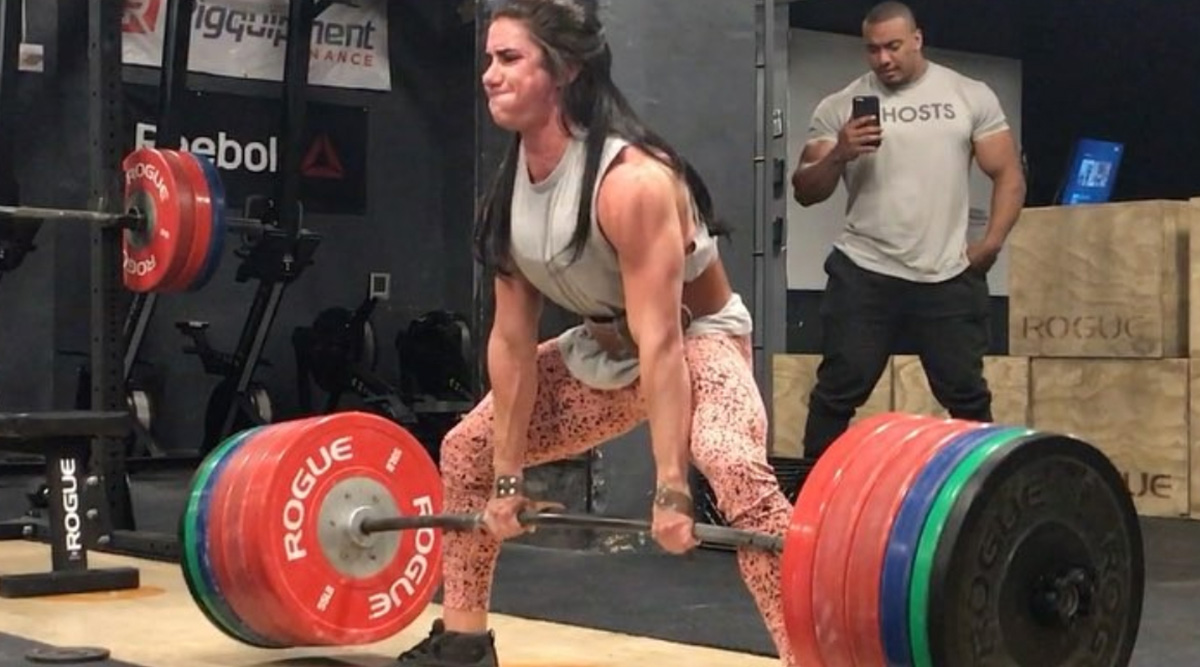
One of the reasons deadlifts are so exhilarating is because you can lift so much weight this way — perhaps an understatement if you’re Stefi Cohen. The powerlifter recently hit a personal best by deadlifting 240kg/525lbs at 123lb bodyweight. Cohen already set a new world record in her weight class last August when she deadlifted 485lbs, but she clearly doesn’t have plans of stopping. Check out Cohen in all her awesomeness.

Cohen is probably more versatile than given credit for, and her insane strength truly knows no boundaries. Case in point: this set of five front squats at 280lbs, which she did as a warm-up for deadlifts.

280lbs x 5 These weren’t programmed yesterday but I like warming up for heavy deads with front squats. #hybridAF

A post shared by Stefanie Cohen (@steficohen) on


Clearly, her unique approach to warming up is working. What else would explain these four easy reps at 503lbs?

503lbs x 4 120lbs bw . @hybridperformancemethod

A post shared by Stefanie Cohen (@steficohen) on

Main image: Stefi Cohen/Instagram

Watch What Happens When a Powerlifter Tries Olympic Weightlifting

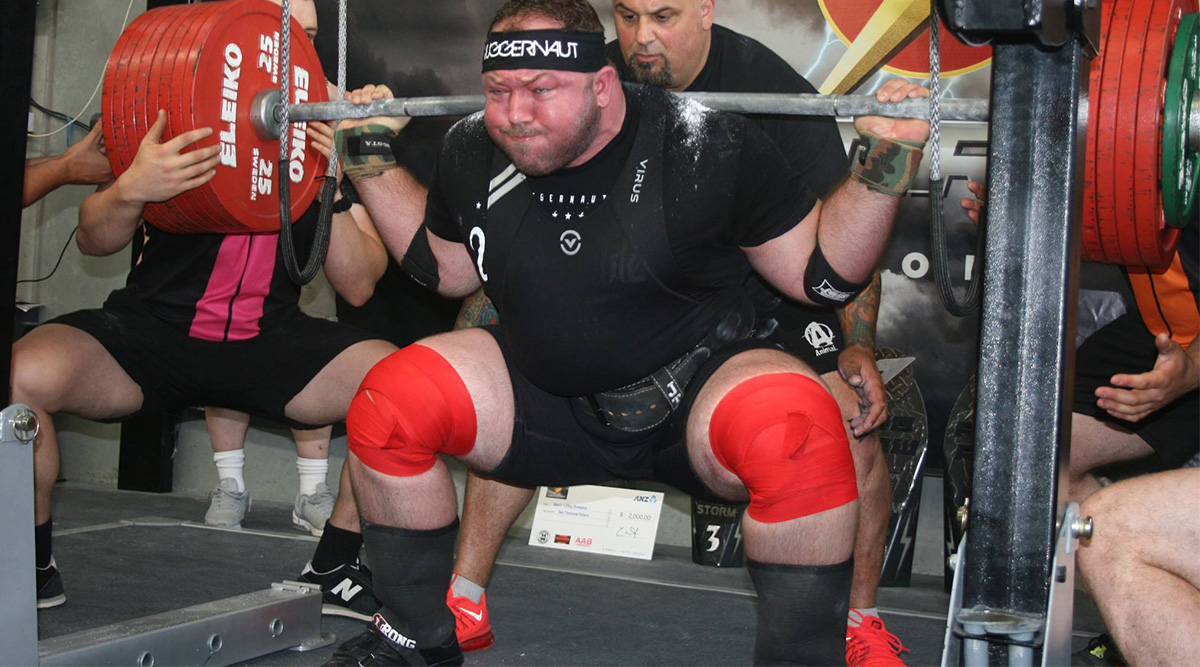
Maybe you’ve heard of Chad Wesley Smith. He owns Juggernaut Training Systems, he’s a top 20 ranked raw powerlifter of all time and he’s insanely strong. According to Juggernaut’s website, he can squat 435kg/959# with wraps, bench 257.5kg/567# and deadlift 367.5kg/810#. He’s also a professional Strongman athlete.

So yes, Chad Wesley Smith is strong.

Now, what happens when a powerlifter tries Olympic weightlifting? Amazing things, that’s what. Smith once made a trip to the Olympic Training Center in Colorado Springs and went on to snatch more than most dedicated weightlifters. In fact, he power snatched it. How much, you ask? Oh, just 125kg (or about 275#). Check it out!

Okay fine, so there was a tiny press-out, which probably would’ve meant white lights on a platform. But still — a 125kg power snatch from someone who doesn’t even regularly practice the Olympic lifts? Not too shabby.

Main image: Chad Wesley Smith/Facebook